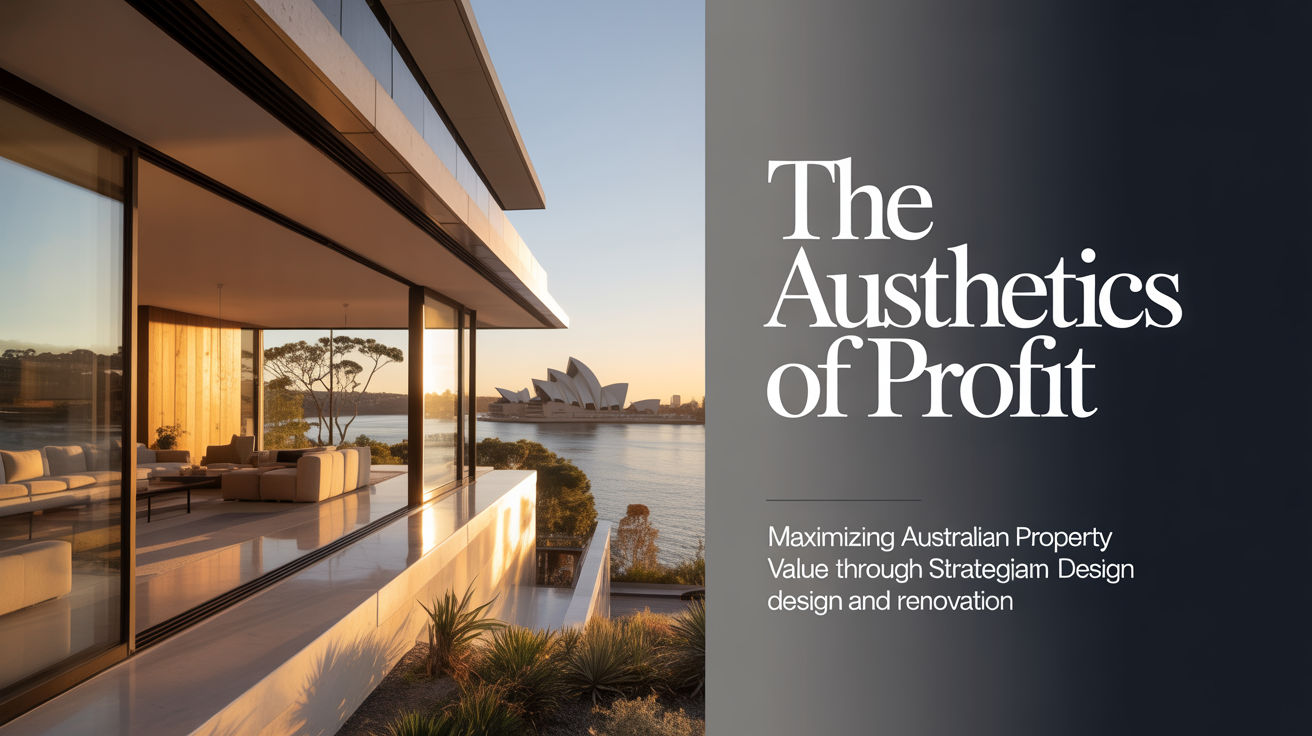
- Design-Led Premiums: Professionally designed or staged homes consistently achieve 7–8% higher sale prices, and in some cases, over 100% more than unstyled properties.
- High-ROI Renovations: Kitchen and bathroom upgrades offer the best returns, with bathrooms often recouping 70–75% of their cost.
- First Impressions are Critical: Strong curb appeal can boost perceived value by up to 11%, and quality landscaping can add as much as 28% to overall value.
- Sustainability Sells: Homes with solar panels add an average of $23,100 (2–4%) to value, with 80%+ of buyers willing to pay more for green features.
- Trending Aesthetics: Natural, high-quality finishes and open, light-filled layouts are paramount, aligning with an ‘organic modern’ appeal.
- Staging Accelerates Sales: Staged homes sell 1–2 weeks faster and 85% sell above asking price, helping buyers visualize potential.
1. Executive Summary
In the dynamic and highly competitive Australian residential real estate market, maximizing sale price goes far beyond traditional factors like location and land size. This executive summary synthesizes key findings from current market research, demonstrating that strategic investments in home design, renovation, and professional staging are not merely aesthetic choices but powerful profit drivers. Data unequivocally shows that properties presented effectively and aligned with contemporary buyer preferences command significant price premiums, offering substantial returns on investment for sellers who understand and leverage these critical levers.
The core insight gleaned from an analysis of more than 115,000 listings and various market reports is that today’s buyers are increasingly willing to pay a premium for a “move-in-ready” aesthetic and lifestyle. Homes that are thoughtfully designed, updated in key areas, and professionally presented significantly outperform their unstyled counterparts. This section will delve into the various facets of this phenomenon, providing specific data points and real-world examples that underscore the transformative power of informed design choices.
The Aesthetics of Profit: Quantifying the Design Premium
The impact of professional design on Australian property values is striking. Listings explicitly advertised as “architect-designed” or “interior-designed” consistently achieve sale prices that are, on average, 7–8% higher than comparable properties without such distinctions[1]. In some high-demand urban centers, this design premium can soar even higher, reaching an impressive 15.8%, translating to an additional ~$200,000 in sale price for properties in city centers[2]. This phenomenon highlights a fundamental shift in buyer expectations: people are actively seeking out and are prepared to pay significantly more for homes that offer a curated, professional aesthetic.
Indeed, the influence of exceptional design can be profound. In extreme, yet illustrative, cases, professionally styled properties have demonstrated the ability to dramatically inflate sale prices. For instance, in Lindisfarne, Tasmania, three-bedroom homes featuring designer interiors commanded a staggering 117% price premium over unstyled equivalents, adding almost $887,000 in value[3]. Similarly, a well-styled home in Gordon, NSW, was estimated to boost its resale value by over 74%, or approximately $1.33 million[4]. These figures, while exceptional, vividly demonstrate that presentation and aesthetics can be as critical as traditional factors like location or land size in determining market value, particularly in a market influenced by the visual appeal of platforms like Instagram and TikTok[5].
The benefits of professional styling are not universally uniform, however, indicating a need for strategic application. Research from Victoria suggests that larger, family-sized homes reap the greatest rewards from professional styling. Specifically, styled three-bedroom houses sold for 7.5% (approximately $71,000) above the suburb average, and four-bedroom homes for 7.0% (around $95,000) more[6]. In contrast, two-bedroom homes in the same study showed virtually no uplift (−0.3%) from styling[7]. This suggests that the emotional investment and higher budgets associated with family home purchases create a more fertile ground for design-led premiums.
The Ascendancy of Home Staging
Home staging, the art of furnishing and decorating a property to enhance its appeal to prospective buyers, is rapidly gaining prominence in Australia, with compelling results. Industry data indicates that staged homes typically fetch 10–12% higher sale prices on average compared to their unstaged counterparts[8]. Critically, staging also accelerates the sales process, with staged properties often selling 1–2 weeks faster[9]. This efficiency is particularly valuable in competitive or shifting market conditions. A remarkable statistic further underscores staging’s efficacy: 85% of staged properties ultimately sell above their asking price[10].
The power of staging lies in its psychological impact. A staggering 90% of buyers struggle to visualize a home’s potential when it’s empty or poorly presented[11]. Staging overcomes this hurdle by creating an aspirational environment that allows buyers to emotionally connect with a property, envisioning their future life within its walls. As one expert succinctly put it, “well-considered design doesn’t just make a home more beautiful, it makes it more valuable”[12]. This emphasizes that sellers who choose to bypass professional presentation are effectively leaving money on the table in today’s market, where buyers expect a certain level of finish and aesthetic appeal from the outset.
Renovation ROI: Where to Invest for Maximum Return
Not all renovations are created equal when it comes to return on investment (ROI). Data consistently points to certain areas of the home that are perennial favorites for buyers and, consequently, deliver the highest value uplift.
Kitchen and Bathroom Upgrades
Kitchen and bathroom renovations remain at the pinnacle of value-adding improvements. These “wet areas” are often the most expensive and disruptive to update, making already-modernized spaces highly attractive to buyers. A mid-range kitchen remodel, costing approximately $35,000, typically adds about $20,000 to a home’s value, representing a commendable 57% ROI[13]. For more extensive kitchen overhauls costing around $65,000, the added value can reach $40,000, pushing the ROI to approximately 62%[14]. Real estate agents frequently note that an updated kitchen can be the deciding factor in securing a sale[15].
Bathroom renovations offer similarly strong, if not stronger, returns, often recouping 70–75% of their cost in added value on resale[16]. Even minor cosmetic refreshes, such as new lighting, fixtures, or regrouting, can boost a property’s value by up to 10%[17]. Buyers prioritize these spaces because they represent significant potential expenses and inconveniences if outdated or poorly maintained, driving their willingness to pay more for turn-key solutions[18].
Curb Appeal and Landscaping
First impressions are paramount. Improvements to a home’s exterior, collectively known as curb appeal, can significantly enhance perceived value. Research shows that strong curb appeal can raise a home’s perceived value by 7–11%[19]. Simple external upgrades like fresh paint, which alone can add up to 5% value, a new front door, and well-maintained landscaping, attract more prospective buyers and can expedite the sale process. Australians place a high value on outdoor living, and this is reflected in the tangible returns from quality landscaping. A well-designed garden or outdoor living space can add as much as 28% to a home’s overall value in some instances[20]. Features such as healthy lawns, modern decks or patios, and dedicated outdoor entertaining areas (e.g., fire pits, pergolas) noticeably elevate buyer interest and willingness to pay premium prices.
Flooring and Finishes
The choice of flooring and internal finishes also plays a crucial role. Premium hardwood flooring, particularly in the luxury segment (properties over $1 million), can recover 70–80% of its cost in added value[21]. For more mainstream properties, durable laminate or engineered wood flooring often provides a superior return compared to dated carpeting, instantly updating a space and signaling quality[22].
Sustainable Features
Beyond traditional renovations, “green” features are increasingly translating into higher sale prices. The installation of solar panels, for example, adds an estimated $23,100 to the average Australian home’s value, representing a 2–4% increase[23], with specific regional variations (e.g., ~$14,940 in Perth, ~$22,600 in regional WA)[24]. A significant 80%+ of buyers are now willing to pay extra for energy-efficient technology and eco-friendly designs[25]. This demonstrates a growing market preference for homes that not only save on utility bills but also align with environmental values.
Trending Aesthetics and Buyer Expectations
Current design trends heavily influence buyer perception and willingness to pay. The “organic modern” aesthetic, characterized by natural, high-quality finishes, is particularly appealing. U.S. data reveals that specific nature-inspired features like soapstone countertops (3.5% premium), white oak flooring (3.2%), and Venetian plaster walls (3.0%) yield higher sale prices, typically adding around $12,500 to a mid-priced home[26]. Australian trends mirror this, with a surge in interest in biophilic design incorporating natural elements to create a luxurious and inviting feel[28].
The timeless Hamptons-inspired coastal design remains exceptionally popular in Australia, appealing to a broad demographic due to its bright, airy, and elegant aesthetic that buyers “cannot get enough of”[10, 29]. Investing in such classic yet contemporary styles can “future-proof” a property’s value. The trend of “quiet luxury”—understated, high-quality finishes and superior craftsmanship—also resonates with high-end buyers, conveying sophistication and attracting stronger offers[30].
A key observation is the sustained demand for “move-in ready” properties. The term “remodeled” itself, when used in listings, has been shown to increase sale prices by approximately 3.7% more than expected[31]. This underscores that buyers prefer homes that require minimal immediate effort or expense, emphasizing the value of even minor cosmetic updates that make a home feel fresh and modern.
Strategic Imperatives: Avoiding Pitfalls and Maximizing Profit
To truly guarantee top dollar, sellers must balance investment with market taste, carefully navigating potential pitfalls:
- Avoiding Overcapitalization: The most crucial strategic consideration is to align renovations with the property’s local market. Pouring vast sums into ultra-luxury materials in a modest neighborhood is likely to result in little to no increase in value, as buyers in that segment will not pay a premium for features that exceed local expectations[32]. The goal is to be the best house on the street, not a vastly overpriced outlier.
- Universal Appeal over Personal Taste: Designs that are overly personalized or niche can alienate a significant portion of the buyer pool. With nearly 90% of buyers struggling to envision changes[11], bold or idiosyncratic decor choices can actively deter potential purchasers by implying additional costs for removal or rework. Neutral color palettes, classic finishes, and versatile layouts appeal to the broadest audience.
- Timelessness over Fleeting Trends: While incorporating current aesthetics can be beneficial, sellers should be wary of chasing short-lived fads that can quickly date a property. Investing in trends like natural materials (e.g., white oak, soapstone) or enduring styles (e.g., Hamptons, mid-century modern) tends to be a safer bet than highly specific or experimental looks that may require future updates to meet evolving tastes[34].
- High-Impact, Cost-Effective Upgrades: Some renovations offer notoriously poor ROI (e.g., swimming pools in some markets). Astute sellers focus on improvements that yield significant impact for relatively lower cost. This includes professional staging, deep cleaning, fresh paint, and modest upgrades to fixtures and hardware, which can collectively boost perceived value disproportionately to their expense.
In conclusion, the Australian property market rewards strategic design and presentation. By focusing on professional styling, high-ROI renovations in kitchens and bathrooms, enhancing curb appeal, integrating sustainable features, and adhering to broadly appealing, timeless design trends, sellers can significantly increase their property’s market value. The evidence overwhelmingly supports the notion that investing in aesthetics is a verifiable pathway to securing top dollar sales.
The subsequent sections of this report will delve deeper into each of these areas, providing specific strategies, detailed trend analysis, and practical guidance for homeowners and investors looking to maximize their property’s profit potential in the Australian market.

2. The Premium on Professional Design and Staging
In the competitive Australian real estate market, the notion that aesthetics are intrinsically linked to value has evolved from anecdotal observation to a quantifiable, data-driven reality. Gone are the days when a property’s fundamental attributes alone determined its worth. Today, professional design and strategic staging are not merely optional enhancements but critical investments that demonstrably command higher sale prices and accelerate market transitions. This section delves into the profound impact of professional design and staging, dissecting the mechanisms through which they generate significant premiums, the specific areas of highest return on investment (ROI), and the evolving expectations of Australian homebuyers.
The Quantifiable Impact of Professional Design and Staging on Sale Prices
The evidence strongly suggests that homes presented with a professional touch consistently outperform their unstyled counterparts. This premium is not marginal but can range from substantial percentage increases in value to, in extreme scenarios, more than doubling a property’s sale price.
Design-Led Premiums: A New Benchmark for Value
A comprehensive analysis of over 115,000 listings across Australia revealed a clear trend: properties advertised as “architect-designed” or “interior-designed” fetch an average of 7–8% higher prices than comparable homes without such professional designations[0]. This statistic alone underscores a fundamental shift in buyer perception, where the inherent quality of design is recognized and valued financially. In urban centers, this premium can be even more pronounced, with a 2023 analysis indicating a design premium reaching as high as 15.8%, translating to approximately $200,000 extra in sale price[20]. This phenomenon signifies that buyers are increasingly willing to pay a premium for a “turnkey” aesthetic, where the design vision is coherent, modern, and carefully executed.
Considerable uplifts are not exclusive to generic properties. Professional interior design has been shown to deliver staggering returns, particularly in markets where buyers are keenly attuned to aesthetics. For instance, in Lindisfarne, Tasmania, three-bedroom homes featuring designer interiors commanded a remarkable 117% price premium over unstyled equivalents, adding almost $887,000 in value in 2025[21]. Similarly, in Gordon, NSW, professional interior design was estimated to augment resale value by over 74%, equating to around $1.33 million[22]. These extraordinary examples, while perhaps outliers, highlight that aesthetics can be as pivotal as traditional factors like location or land size in determining market value[25]. Modern buyers, influenced by platforms like Instagram and HGTV, seek an “Instagram dream home” and are prepared to bid emotionally for spaces that exude designer flair and a move-in-ready appeal.
The Strategic Power of Home Staging
Home staging, though still an evolving practice in Australia, demonstrates compelling success rates. This involves furnishing and decorating an unoccupied property or enhancing an occupied one to highlight its best features and create an aspirational environment. Staged homes typically sell for approximately 10–12% higher than unstaged properties on average[13]. Furthermore, staging significantly accelerates the sales process, with staged properties often selling 1–2 weeks faster than empty homes[15]. A striking 85% of staged properties ultimately sell above their asking price[14], indicating that the investment in professional staging often yields substantial returns. The psychological impact is clear: staging enables prospective buyers to easily envision themselves living in and enjoying the space, fostering an emotional connection that translates to higher bids.
Table 1: Impact of Professional Design and Staging on Sale Price and Speed in Australia
| Aspect | Impact | Specific Data/Examples | Source |
|---|---|---|---|
| Professionally designed/styled homes | Higher sale prices | 7–8% higher than comparable homes; up to 120% more than unstyled (Melbourne); 15.8% (~$200k) premium in city centers. | realestate.com.au[0][20] |
| Interior design (extreme cases) | Significant value uplift | 117% premium (+$887k) for 3-bed homes in Lindisfarne, TAS; 74% (+$1.33M) in Gordon, NSW. | realestate.com.au[21][22] |
| Home staging | Increased sale price & speed | 10–12% higher sale price; sells 1–2 weeks faster; 85% sell above asking price. | House Grail[13][14][15] |
| Styled 3-bedroom houses (Victoria) | Premium over average | 7.5% (~$71,000) above suburb average. | realestate.com.au[23] |
| Styled 4-bedroom houses (Victoria) | Premium over average | 7.0% (~$95,000) above suburb average. | realestate.com.au[23] |
Importantly, the impact of staging is not uniform across all property types. A study in Victoria indicated that professional styling yielded significant uplifts for larger family homes:
- 3-bedroom houses: Sold for 7.5% (approximately $71,000) above the suburb average[23].
- 4-bedroom houses: Achieved 7.0% (approximately $95,000) more than the average[23].
Conversely, styled 2-bedroom homes experienced virtually no price uplift (a negative 0.3% effect) within the same study[24]. This suggests that staging is most impactful for family-sized properties where buyers tend to be more emotionally invested and have larger budgets, whereas smaller, entry-level properties might be more price-sensitive. Nevertheless, the overarching sentiment among real estate professionals is that effective presentation has transitioned from a beneficial extra to a fundamental expectation in the current market[30].
Why Professional Presentation Commands a Premium: The Science of Buyer Psychology
The significant premiums fetched by professionally designed and staged homes are rooted in fundamental buyer psychology and evolving market dynamics. Several key factors contribute to this phenomenon:
The “Move-In Ready” imperative and Visualization Gap
Modern buyers have a notoriously low tolerance for “fixer-uppers” or properties requiring extensive work. A staggering 90% of buyers struggle to visualize a home’s potential if it is vacant or poorly presented[16]. An empty room appears smaller and lacks warmth, making it difficult for a buyer to grasp its scale, imagine furniture placement, or connect with it emotionally. Overly personalized or dated decor can be equally detrimental, as buyers perceive the cost and effort involved in removing or updating these elements. As one buyers’ agent noted, presentation used to be an optional extra, but today “it’s a baseline expectation”[30].
Professional staging bridges this visualization gap, transforming a blank canvas into a compelling lifestyle proposition. Carefully selected furniture, artwork, and accessories define spaces, create visual interest, and highlight the property’s best features, allowing buyers to instantly see how their life could unfold within those walls. This significantly reduces perceived effort and risk for the buyer, leading them to be more comfortable paying a higher price for a home that appears flawless and ready for immediate occupation.
Emotional Connection and Aspirational Lifestyle
Purchasing a home is often an intensely emotional decision. Professional design and staging are powerful tools for evoking positive emotions and appealing to aspirational desires. A beautifully curated space doesn’t just sell square footage; it sells a lifestyle. This involves creating a coherent narrative for the home, making it feel luxurious, cohesive, and inviting. The right design can tap into universal desires for comfort, sophistication, and belonging. When buyers step into a styled home, they envision entertaining friends, raising a family, or simply enjoying a tranquil retreat. This emotional investment can compel them to make stronger offers, often exceeding their initial rational budget. The concept of “well-considered design” elevates a property beyond mere bricks and mortar, transforming it into an object of desire that buyers will compete for[28].
Perceived Quality and Value
Professional presentation signals inherent quality, even if only on a superficial level. A meticulously styled home suggests that the property has been well-maintained and thoughtfully cared for. This perception can lead buyers to assume higher quality in underlying fixtures and systems, even if they are not explicitly visible. Conversely, a poorly presented or dated home can create doubts about its structural integrity or the extent of hidden issues, leading to lower offers or buyers being deterred entirely. In an era where buyers are accustomed to visually appealing content via social media, a home that meets these aesthetic expectations instantly accrues a higher perceived value. They are effectively paying for the confidence that the home is up-to-date, requires no immediate work, and reflects a contemporary standard of living.
Strategic Renovations: High-ROI Upgrades
While professional staging elevates current presentation, strategic renovations address structural and functional aspects that consistently yield high returns. Not all renovations are created equal in terms of ROI; focusing on specific areas can significantly enhance sale value.
Kitchens and Bathrooms: The Heart of the Matter
Kitchen and bathroom upgrades consistently deliver the highest returns among renovations. These “wet areas” are often the most expensive rooms to renovate and are critical decision-makers for buyers. An outdated kitchen or bathroom can be a major deterrent, as buyers are reluctant to immediately undertake costly and disruptive renovation projects.
- Kitchens: A mid-range kitchen remodel, costing around $35,000, can typically add approximately $20,000 to a home’s value, representing an ROI of about 57%[10]. More extensive overhauls costing $65,000 can add up to $40,000 in value, pushing the ROI to approximately 62%[11]. As a “make-or-break” room, an updated, stylish kitchen with modern appliances and an open layout often tips the sale in the seller’s favor[12].
- Bathrooms: Bathroom renovations generally recoup an even higher percentage of their cost, typically around 70–75% in added value on resale[4]. Even minor refreshes, such as new lighting, fixtures, or regrouting, can add up to 10% to a property’s value[17]. The appeal of a fresh, neutral-toned bathroom signals “no immediate expenses,” a quality many buyers are willing to pay for.
The high ROI stems from buyer psychology: they often overestimate the cost and disruption of renovating these spaces themselves. Therefore, a home with already modernized wet areas holds a significant appeal, translating directly to a willingness to pay more.
Curb Appeal and Landscaping: First Impressions that Last
The exterior of a home and its surrounding grounds create the crucial first impression. Strong curb appeal can boost a home’s perceived value by 7–11%[5]. Simple external improvements often yield significant returns:
- Fresh paint: Can add approximately 5% to the home’s value[18].
- Quality landscaping: A well-designed garden and outdoor living space can add up to 28% to a home’s overall value, though this is often an upper-end estimate for exceptional projects[6]. Features like healthy lawns, modern decks/patios, and outdoor entertaining areas (e.g., fire pits, pergolas) noticeably elevate buyer interest. For example, in the U.S., outdoor kitchens or firepit areas have shown to add 2–3% to the sale price[34].
In Australia, where outdoor living is highly valued, these improvements not only attract more potential buyers but also allow sellers to price the home more competitively.
Flooring and Finishes: The Foundation of Appeal
Upgrading dated flooring and finishes throughout the property can yield strong returns and broaden appeal.
- Hardwood flooring: In luxury properties (typically above $1M), premium hardwood flooring can recover 70–80% of its cost in added home value[8].
- Durable laminate or engineered wood: For more average homes, these options offer a better return than wall-to-wall carpeting and significantly update a space[9]. New floors instantly signal quality and modernity.
Quality-focused updates, such as stone benchtops, soft-close cabinetry, and elegant neutral décor, might appeal to a higher bracket of buyers who are willing to pay more for perceived quality and attention to detail.
Adding Usable Space: Bedrooms and Baths
Expanding usable living space remains a reliable strategy for increasing sale price.
- Extra bedroom: In a mid-priced Australian home (valued between $500k and $1M), adding an extra bedroom can typically raise the sale price by approximately $50,000–$80,000[19]. While the cost to add a bedroom (often $50k–$100k) can be substantial, it can significantly widen the buyer pool by changing the home’s classification (e.g., from a 2-bed to a 3-bed home).
- Second bathroom: An additional bathroom, particularly in a home that previously only had one, can dramatically improve functionality and appeal, leading to a higher sale price.
The Ascendancy of Sustainable Design and Smart Technology
Beyond traditional aesthetic and functional upgrades, sustainability and smart home technology are increasingly becoming key drivers of value and buyer preference.
Solar Panels: A Bright Investment
Eco-friendly upgrades are no longer just about environmental consciousness; they are tangible assets that boost property values. Solar panel installations add an estimated $23,100 to the average Australian home’s value[7]. City-specific data shows solar adds roughly 2–4% to value, such as approximately $14,940 (2.1%) in Perth and $22,600 (4%) in regional Western Australia[7]. With rising energy costs, buyers are increasingly willing to pay a premium for homes that promise long-term savings on utility bills.
Energy Efficiency as a Selling Point
The broader trend towards energy efficiency is undeniable. Over 80% of Australian buyers indicate a willingness to pay more for homes equipped with energy-saving technologies, including efficient appliances and insulation[7]. This aligns with international trends, where, for example, buyers in the UK are willing to pay around 15% more for homes with top energy ratings. Features like double-glazing, high energy performance certificates (EPCs), and home battery systems are highly sought after, confirming that sustainable design not only reduces operating costs but also commands a higher sale price.
Evolving Design Trends and Their Market Impact
Contemporary design trends play a significant role in buyer willingness to pay, with certain aesthetics gaining particular traction.
The Allure of Natural and Organic Modernism
The “organic modern” trend, which marries natural materials with clean, contemporary lines, is a powerful value driver. Recent U.S. research by Zillow (2025) highlights significant price premiums for homes featuring:
- Soapstone countertops: 3.5% premium[12]
- White oak floors: 3.2% premium[12]
- Venetian plaster walls: 3.0% premium[12]
These finishes, contributing to a serene and high-quality environment, can add approximately $12,500 to the sale of a mid-priced home[12]. Australian designers also report a surge in interest for “biophilic design,” incorporating natural elements like plants and timber, to create calming, sanctuary-like spaces that differentiate a listing[37].
Timeless Coastal and Hamptons Style
In Australia, the Hamptons-inspired coastal style has transcended mere trend status to become a perennially popular aesthetic that attracts top-dollar buyers. Characterized by neutral palettes, abundant natural light, timber floors, and an overall breezy elegance, this style remains “a hit with Australian buyers”[12]. Its timeless appeal makes a Hamptons-look renovation a safe investment, as it retains value and attracts a broad demographic. Well-executed coastal-themed homes frequently spark bidding wars, particularly in lifestyle-driven markets, underscoring the enduring power of classic, appealing design.
“Quiet Luxury” and Smart Integration
At the higher end of the market, a shift towards “quiet luxury” is observable—emphasizing understated quality over overt opulence. This involves muted color schemes, exquisite yet subtle materials, and superior craftsmanship. Post-pandemic buyers, in particular, favour designs that feel comfortable, crafted, and refined over flashy displays. This translates into preferences for matte finishes, curved furniture, artisan light fixtures, and rich textures. Properties that embody this sophisticated aesthetic often attract a wealthier demographic and stronger offers, as these design choices also photograph exceptionally well for online listings, drawing increased interest.
Beyond visual aesthetics, the integration of smart home technology — from app-controlled lighting and security to smart thermostats — is another burgeoning trend. While still relatively nascent, smart tech appeals particularly to younger, tech-savvy buyers. A home fully equipped with intelligent automation can command a premium due to the convenience and “future-proof” factor it offers. These trends collectively illustrate that top-dollar designs increasingly intertwine aesthetics with functionality and conscience, creating a compelling package for discerning buyers.
Balancing Investment with Market Taste: What Not to Do
While the benefits of professional design and strategic renovation are clear, it is equally important to avoid pitfalls that can negate value or even deter buyers.
The Peril of Overcapitalization
A critical warning for renovators is to avoid overspending on upgrades that the local market will not support. Pouring substantial sums into ultra-high-end finishes in a modest neighbourhood often yields little to no increase in appraised value. If a renovation makes a property significantly more expensive than comparable homes in the area, it risks pricing itself out of the market. Experts advise against luxury finishes in modest suburbs, as buyers are unlikely to pay dollar-for-dollar for features that exceed neighbourhood norms. The goal is to upgrade in alignment with – or slightly above – the neighbourhood standard, striving to be the best home on the street without becoming an anomaly.
Personalization vs. Universal Appeal
Designing a home too specifically to personal taste can be detrimental to resale value. Highly customized elements, such as themed rooms, unconventional layouts, or bold, niche decor, can alienate a broad spectrum of buyers. As nearly 90% of buyers struggle to visualize changes[16], overly personalized features often appear as liabilities that need to be undone, adding perceived cost and effort for the buyer. The strategy should be to maintain a neutral and high-quality “base canvas” (floors, walls, built-in features), reserving personalized touches for easily changeable elements like paint or portable decor.
Navigating Trend Whiplash
Chasing fleeting design fads can also backfire. Trends that are intensely popular one year can quickly become dated the next. Over-reliance on niche or ephemeral trends, such as specific patterned tiles or highly stylized light fixtures, can limit buyer appeal. The key is to distinguish between enduring design principles (e.g., natural textures, open layouts) and transient fads. A good rule of thumb is to opt for timeless, classic aesthetics with contemporary touches, which appeal to the broadest audience and protect long-term value.
Budgeting for Impact: Low-Cost, High-Impact Interventions
Not all improvements require substantial investment. Sellers should identify high-impact, lower-cost interventions that significantly boost appeal. For example, professional staging, a deep clean, or a fresh coat of neutral paint can yield substantial returns for a relatively modest outlay. These strategic investments enhance perceived value without the risk of overcapitalization inherent in major structural changes. Conversely, certain high-cost features like swimming pools, while appealing to some, may not fully recoup their cost in many Australian markets and can even narrow the buyer pool due to perceived maintenance or safety concerns.
Table 2: Renovation ROI Breakdown for Australian Homes
| Renovation Type | Average Cost (Approx.) | Value Added (Approx.) | ROI (Approx.) | Key Buyer Appeal |
|---|---|---|---|---|
| Mid-range Kitchen Remodel | $35,000 | $20,000 | 57% | “Make-or-break” room, reduces buyer’s immediate expense and hassle |
| Extensive Kitchen Overhaul | $65,000 | $40,000 | 62% | Enhanced functionality and aesthetics, luxury feel |
| Bathroom Renovation | Varies | 70–75% of cost | 70–75% | Signals “no immediate expenses,” clean and modern feel |
| Minor Bathroom Refresh | Low | Up to 10% value | High, cost-effective | Updates instantly, improves perception of maintenance |
| Curb Appeal Enhancements | Low to moderate | 7–11% perceived value | High, cost-effective | Strong first impression, signals well-maintained property |
| Exterior Painting | Moderate | ~5% value | Moderate to High | Fresh, clean look; improves overall perceived condition |
| Quality Landscaping | Moderate to High | Up to 28% value (upper end) | Moderate to High | Enhances outdoor lifestyle, perceived desirability |
| Hardwood Flooring (Luxury) | High | 70–80% of cost | 70–80% | Premium feel, durability, timeless appeal |
| Solar Panel Installation | Moderate | +$23,100 (average) | Varies (long-term savings + value) | Energy efficiency, cost savings, sustainability |
| Adding an Extra Bedroom | $50,000–$100,000 | $50,000–$80,000 | Varies, break-even to modest profit | Increases functionality, widens target market |
Case Studies: Real-World Manifestations of the Premium
The impact of professional design and staging, coupled with strategic renovations, is vividly illustrated through numerous real-world examples in Australia.
The transformation of a tired 2-bedroom house in Grange, South Australia, by Paul and his wife, exemplifies the power of adding usable living space and a fresh aesthetic. Purchased for $525,000, they invested approximately $60,000–$70,000 in a budget-conscious renovation, primarily adding two bedrooms upstairs (converting it into a 4-bedroom home), installing a new kitchen, and updating the outdoor areas[47][48]. The property subsequently sold for $745,000, yielding a roughly $150,000 profit after renovation costs and a $220,000 increase over purchase price[49]. This case highlights how strategically increasing bedroom count and modernizing key areas can significantly boost value.
Another compelling instance involves Reece and Sam, first-home buyers who purchased a fixer-upper in the Adelaide region for $319,000 in 2019[50]. Leveraging Reece’s painting skills, they undertook a full cosmetic overhaul, focusing on fresh, neutral paint, polished floors, and updated fixtures. The property later sold for $525,000, resulting in a $206,000 gain over their purchase price[51]. This demonstrates that even without a large budget, significant profits can be generated through strategic DIY efforts focused on cleanliness, modern finishes, and universal appeal.
A direct comparison in Lindisfarne, Tasmania, starkly revealed the impact of professional design. A 3-bedroom home at 33 Elwood Drive, professionally styled and updated, sold for $750,000. A very similar, unrenovated 3-bedroom house nearby achieved approximately $130,000 less, showcasing a 21% higher price for the styled home[53]. This example powerfully illustrates that buyers are willing to pay a substantial premium for a property that is presented immaculately and thoughtfully designed.
Perhaps the most extreme, yet instructive, example comes from *The Block 2022*. The record-breaking sale of Omar and Oz’s property in Gisborne for $5.666 million against a reserve of $4.08 million resulted in a $1.586 million profit[55]. Their success was attributed to a luxury “moody” kitchen with $250,000 in high-end appliances, lavish bathrooms, and resort-like outdoor amenities[56]. This extreme case underscores the potential for top-tier design and “wow factor” features to ignite bidding wars and achieve prices well above intrinsic value for the right market segment.
These examples collectively reinforce the central theme: investing in professional design, staging, and strategically chosen renovations is not an extravagant expense but a calculated business decision that yields significant financial returns in the Australian property market. As buyers’ expectations continue to rise, overlooking the aesthetic and functional presentation of a property means leaving substantial profit on the table.
Beyond these individual successes, there is a consistent message from the market: design for your target buyer, rather than solely for personal taste. This discerning approach ensures that investments align with buyer demand, thereby maximizing the sales price and ultimately delivering top dollar.
The next section will further explore these design motivations by delving into specific renovation areas, focusing on how different rooms and features can be strategically updated to maximize their appeal and financial return.

3. High-Return Renovations: Kitchens and Bathrooms
In the dynamic Australian property market, where buyer expectations are consistently rising and competition remains fierce, strategic renovations are no longer just about personal comfort but about maximising investment returns at the point of sale. Among the myriad of potential home improvements, kitchen and bathroom upgrades consistently emerge as the undisputed champions for delivering the highest return on investment (ROI)[3]. These critical “wet areas” are pivotal in influencing buyer psychology, often serving as the make-or-break factors that determine a property’s appeal and, ultimately, its sale price. This section delves into the compelling data supporting the pre-eminence of kitchen and bathroom renovations, exploring the underlying buyer psychology, scrutinising typical cost recoupment rates, and dissecting the impact of both major overhauls and minor cosmetic enhancements.
The contemporary Australian buyer is increasingly sophisticated, often influenced by the curated aesthetics presented on social media platforms like Instagram and lifestyle programming akin to HGTV. This exposure has cultivated a strong preference for move-in-ready homes with modern design and quality finishes[5]. As a result, properties that present a polished, updated aesthetic, particularly in high-traffic and functional spaces like kitchens and bathrooms, attract greater interest, command higher bids, and often sell faster than their outdated counterparts. The investment in these high-impact areas addresses a key pain point for prospective homeowners: the significant cost and disruption associated with undertaking such renovations themselves. By delivering these upgrades proactively, sellers effectively transfer perceived value to buyers, who are, in turn, willing to pay a premium for convenience and contemporary living.
The Undisputed ROI Kings: Kitchens and Bathrooms
When considering which renovation projects offer the most financial upside for Australian homeowners, kitchens and bathrooms consistently top the list. These rooms are not merely utilitarian spaces; they are central to daily living, family interaction, and personal well-being. Consequently, their condition and aesthetic appeal heavily influence a buyer’s overall perception of a home’s value.
Kitchen Renovations: The Heart of the Home, The Heart of the Return
The kitchen is widely regarded as the heart of any home, and its condition is a primary consideration for potential buyers. A modern, functional, and aesthetically pleasing kitchen can dramatically enhance a property’s marketability and sale price. Data from across Australia unequivocally supports this:
- A mid-range kitchen remodel in Australia, typically costing around $35,000, is estimated to add approximately $20,000 to a home’s value, representing an impressive recoupment rate of about 57%[3].
- For those willing to invest more, a more extensive kitchen overhaul, potentially costing around $65,000, can add up to $40,000 in value, pushing the ROI to approximately 62%[3].
These figures demonstrate that investing in a kitchen renovation is a highly effective strategy for increasing property value. As one real estate expert noted, updated kitchens are often the “make-or-break” rooms for buyers, frequently Tipping the balance in the owner’s favour[4].
Bathroom Upgrades: A Sanctuary of Significant Returns
Bathrooms, much like kitchens, are high-value areas where buyers closely scrutinise condition and modernity. Given the cost and inconvenience of renovating these spaces, a fresh, updated bathroom is a powerful selling point. The ROI for bathroom renovations is notably strong:
- Bathroom renovations can typically recoup between 70% and 75% of their cost in added value upon resale[3]. This makes them one of the most profitable renovation categories.
- Even minor cosmetic updates, such as replacing light fixtures, upgrading taps and showerheads, or professional regrouting, can conservatively add up to 10% to a property’s value, according to Australian agents[4].
The consistent high ROI of both kitchen and bathroom projects underscores their importance. Buyers prioritise updated “wet areas” because they represent significant financial outlays and potential disruptions that buyers prefer to avoid immediately after purchase[3].
Buyer Psychology: Why Kitchens and Bathrooms Reign Supreme
The enduring appeal and high ROI of kitchen and bathroom renovations are deeply rooted in buyer psychology. Understanding these drivers is crucial for strategic renovation planning:
- Perceived Cost and Inconvenience: Buyers often overestimate the cost and hassle involved in renovating kitchens and bathrooms. Consequently, a home where these critical areas are already modern and appealing is seen as a significant value proposition. They are willing to pay a premium to avoid the mess, disruption, and expense of undertaking these projects themselves post-purchase.
- Functional Necessity and Daily Use: Kitchens and bathrooms are among the most frequently used rooms in any household. Their functionality and aesthetic directly impact daily comfort and quality of life. An outdated or poorly maintained kitchen or bathroom can be a constant source of frustration, while a modern one enhances the living experience.
- Emotional Connection: The kitchen is often associated with family gatherings, cooking, and socialising, fostering a strong emotional connection. Similarly, a well-designed bathroom can evoke feelings of relaxation and luxury, functioning as a personal sanctuary. Buyers are more likely to form a strong emotional attachment, and thus pay more, for properties that resonate with theseaspirational lifestyles.
- Health and Hygiene: Buyers are acutely aware of issues like mould, leaks, and outdated plumbing in bathrooms, and worn-out appliances or dilapidated cabinetry in kitchens. Renovated wet areas signal cleanliness, good maintenance, and a reduced risk of immediate, costly repairs, providing peace of mind.
- Stylistic Impact: Kitchens and bathrooms are spaces where design trends are most visibly expressed. A modern kitchen with contemporary fixtures, quality benchtops, and an open layout often clinches a deal[4]. Similarly, a fresh, neutral-toned bathroom with sleek finishes gives an impression of a well-cared-for home.
Major Overhauls vs. Cosmetic Updates: Finding the Right Balance
Not all renovations need to be full-scale demolitions to yield significant returns. Both major overhauls and minor cosmetic improvements have their place, depending on the property’s condition, the target market, and the available budget.
Major Overhauls: Transforming Space and Functionality
A full kitchen or bathroom overhaul involves significant structural changes, appliance replacements, new cabinetry, flooring, and often reconfiguring the layout. This approach is ideal for truly outdated or dysfunctional spaces. The benefits typically include:
- Increased Liveability: Modern layouts enhance flow and usability, for instance, by creating an open-plan kitchen and dining area.
- Higher Perceived Value: Buyers immediately recognise a brand-new space and are willing to pay for it.
- Broadened Appeal: A fully renovated space attracts a wider demographic, as it eliminates the need for buyers to undertake major work.
However, major overhauls come with higher costs and risks of overcapitalisation if not carefully planned. For example, spending $100,000 on a custom, ultra-luxury kitchen in a modest suburb might not generate a dollar-for-dollar return and could price the property out of its local market segment[10].
Cosmetic Updates: High Impact, Lower Cost
For properties where the underlying structure is sound but the aesthetics are dated, cosmetic updates can offer an excellent balance of impact and cost-effectiveness. These might include:
- Painting: A fresh coat of neutral paint can instantly brighten and modernise a space. Repainting cabinets in the kitchen or bathroom is a cost-effective way to update their look.
- Fixtures and Fittings: Replacing hardware (cabinet handles, taps, showerheads), light fixtures, and towel rails can give a room a significant lift without major expense.
- Benchtops and Splashbacks: Upgrading an old laminate benchtop to a modern, durable material like engineered stone, or updating a dated splashback, provides a fresh focal point.
- Regrouting and Sealing: Fresh grout can transform a tired-looking tiled area in a bathroom, making it appear cleaner and newer.
- Flooring: Replacing worn carpet or vinyl with durable laminate, engineered wood, or modern tiles can dramatically improve the perception of quality throughout the home[4].
Even properties described as “remodeled” (which can include minor updates) sell for approximately 3.7% more than expected[7]. These incremental upgrades are crucial because they refresh the space, making it appear move-in ready to buyers who struggle to visualise potential in poorly presented homes[5].
The table below summarises typical ROI figures for common renovation projects relevant to kitchens and bathrooms:
| Renovation Type | Average Cost (Approx.) | Added Value (Approx.) | Typical ROI (%) | Key Impact |
|---|---|---|---|---|
| Mid-range Kitchen Remodel | $35,000 | $20,000 | 57%[3] | Modernises central living space, enhances functionality. |
| Extensive Kitchen Overhaul | $65,000 | $40,000 | 62%[3] | Complete transformation, appeals to high-end buyers. |
| Bathroom Renovation | Varies | 70-75%[3] | Reduces perceived post-purchase expense, signals hygiene. | |
| Minor Bathroom Refresh (e.g., fixtures, regrouting) | Low | Up to 10% of property value[4] | Cost-effective update, improves perceived cleanliness. | |
| Hardwood/Premium Flooring (luxury properties) | Variable | 70-80%[4] | Signals luxury, durability, and contemporary style. | |
| Fresh Exterior Paint | Variable | Up to 5% of property value[8] | Boosts curb appeal, first impressions. |
Strategic Choices: What Not to Overlook
Beyond the primary kitchen and bathroom upgrades, several strategic considerations can either enhance or detract from the overall value proposition:
- Neutrality and Timelessness: Opt for neutral colour schemes and timeless finishes in primary renovation elements. While trending styles like “organic modernism” (featuring soapstone, white oak, Venetian plaster) can attract premiums of 3-3.5%[7], overly personal or highly specific trends risk alienating a portion of the buyer pool or quickly dating the property. The Hamptons-inspired coastal style, for instance, has evolved into a timeless and perennially popular aesthetic in Australia, appealing broadly across demographics[6].
- Functional Layout and Flow: Modern buyers highly value open, light-filled layouts that promote a sense of flow and functionality. Eliminating redundant walls to create open-plan living areas, or ensuring natural light permeates key spaces, can significantly enhance appeal. Appraisers often factor functional design into valuations, and buyers are willing to pay more for layouts that feel spacious and cohesive[9].
- Curb Appeal: The exterior of a home creates the crucial first impression. Strong curb appeal can boost a property’s perceived value by 7% to 11%[4]. Simple improvements like a fresh coat of paint, a new front door, and tidy landscaping are inexpensive yet highly influential.
- Sustainability and Energy Efficiency: The increasing demand for eco-friendly homes is translating into higher sale prices. Solar panel installations add approximately $23,100 to the average Australian home’s value, representing a 2-4% increase[12]. Over 80% of buyers are willing to pay more for homes with energy-saving technologies[12], indicating a strong market preference for sustainable features.
- Professional Staging: While not a renovation per se, professional staging is an undeniable value-add. Staged homes in Australia sell for about 10-12% more and often sell faster than unstaged properties[11]. This is largely due to the fact that nearly 90% of buyers struggle to visualise a home’s full potential if it’s empty or poorly presented[5].
The Pitfalls of Overcapitalisation and Misguided Trends
While the focus is on high-return renovations, it’s equally important to understand what *not* to do. The concept of “overcapitalisation” is a critical caution: spending excessively on ultra-luxurious materials or highly personalised designs in a property that doesn’t align with its neighbourhood or target market can result in nil or even negative returns[10].
- Mismatching Upgrades to Market: A $100,000 imported marble kitchen in an area where homes average $600,000 will likely not yield a proportionate return. The goal should be to upgrade to a standard that is slightly above the neighbourhood average but not so far removed that it prices the home out of its segment.
- Highly Personalised Designs: Features like a custom-built home cinema that sacrifices a bedroom, or an overly bold and niche colour scheme, can drastically narrow the buyer pool. Buyers often see such unique elements as costs they will need to incur to revert the space to their own taste, leading to lower offers.
- Chasing Fickle Fads: Design trends can be ephemeral. Investing heavily in a temporary fad can lead to the property looking dated within a few years, necessitating further updates before resale. Timeless elegance and neutral palettes provide a safer long-term investment.
- Ignoring Functional Gaps: Sometimes, the best renovation isn’t a cosmetic one but an addition that improves core functionality. Adding a second bathroom to a single-bathroom home, for instance, can significantly re-classify a property and attract a new segment of buyers, potentially adding $50,000 to $80,000 in value, though cost-effectiveness must be considered for such additions[13].
Conclusion: A Strategic Imperative
The evidence is clear: kitchens and bathrooms are, without question, the renovation powerhouses in the Australian property market. Their consistent high ROI, driven by profound buyer psychological factors, mandates that they be central to any value-add strategy. Whether through major transformations or strategic cosmetic enhancements, upgrading these spaces signals a move-in-ready, desirable home that aligns with modern buyer expectations. By carefully balancing investment with local market tastes and avoiding the pitfalls of overcapitalisation or fleeting trends, sellers can leverage these critical areas to command top dollar and achieve exceptional results.
Moving beyond the individual rooms, the broader aesthetic context of a home plays an equally significant role. The next section will explore the transformative impact of professional design and staging, revealing how presenting a home as an aspirational lifestyle can unlock further premiums beyond structural improvements.

4. Maximizing First Impressions: Curb Appeal and Layout
In the competitive Australian property market, the adage “you never get a second chance to make a first impression” holds significant financial weight. From the moment a potential buyer glimpses a property online or drives past it, their perception of its value begins to form. This initial assessment, whether conscious or subconscious, is profoundly influenced by the home’s curb appeal and its internal layout and flow. Investing strategically in these aspects is not merely about aesthetics; it is a tangible path to securing top dollar sales, often yielding substantial premiums and faster sales cycles. This section delves into the critical role of external presentation and optimized interior layouts, exploring the specific elements that captivate buyers and translate into higher sale prices, including the value added by landscaping, open-plan designs, natural light, and seamless indoor-outdoor connectivity.
The Tangible Value of Curb Appeal: Beyond Aesthetics
Curb appeal refers to the attractiveness of a property and its surroundings when viewed from the street. It encompasses everything from the front garden and facade to the entryway and driveway. Its impact on perceived value is not trivial; real estate surveys unequivocally demonstrate that strong street appeal can elevate a home’s perceived value by a considerable 7–11%[5]. This premium is rooted in human psychology: a well-maintained and attractive exterior signals that the property has been cared for, implying fewer hidden problems and a move-in-ready experience that many buyers are willing to pay for. Conversely, a neglected exterior can deter potential buyers before they even step inside, making them less likely to view the property and potentially leading to lower offers or a longer time on the market.
The financial benefits of enhancing curb appeal are diverse, ranging from quicker sales to higher achieved prices. Simple, cost-effective improvements can yield disproportionately high returns. For instance, a fresh coat of exterior paint can add approximately 5% to a home’s value[14]. This is a powerful example of how a relatively modest investment can pay significant dividends by instantly modernizing a home’s appearance and signalling meticulous upkeep. Other key elements include:
- Well-maintained façade: Cleaning, repairing, or repainting the exterior walls, trimming eaves, and ensuring windows are clean and functional.
- Inviting entryway: A fresh front door (perhaps painted a contrasting colour), updated house numbers, a new doormat, and attractive lighting can create a welcoming first impression.
- Tidy driveway and pathways: Repairing cracks, cleaning stains, and ensuring clear, well-edged paths to the entrance contribute to an overall sense of order and care.
These elements, while seemingly minor, collectively contribute to an aura of quality and maintenance that directly correlates with higher buyer confidence and willingness to bid competitively. The goal is to create an immediate positive emotional response, compelling buyers to explore further and fostering a perception of a well-cared-for home.
Landscaping as a Strategic Investment
Beyond the immediate facade, landscaping plays a pivotal role in establishing superior curb appeal and significantly impacting a property’s overall value. In Australia, where an outdoor lifestyle is highly valued, a well-designed garden and outdoor living space are not just amenities but integral parts of the home’s appeal. Experts estimate that quality landscaping can add as much as 28% to a home’s overall value[6]. While this figure represents the upper end for exceptional designs, it underscores the substantial financial leverage that thoughtful outdoor improvements can provide.
The types of landscaping enhancements that command a premium include:
- Healthy lawns and plantings: A neatly mown, green lawn and well-maintained garden beds with appropriate, healthy vegetation convey a sense of care and appeal.
- Outdoor living areas: Features such as modern decks or patios, pergolas, fire pits, and well-integrated outdoor kitchens are particularly attractive. Zillow data, reflecting a similar trend, shows that an outdoor kitchen or firepit area can add approximately 2–3% to the sale price in the U.S. market[17]. These additions expand the functional living space of the home, aligning with the Australian desire for alfresco entertaining and relaxation.
- Thoughtful hardscaping: Retaining walls, paved paths, and strategically placed decorative elements can define spaces and add structure to the garden.
- Mature trees and privacy hedges: These not only enhance aesthetics but also offer shade, privacy, and a sense of permanence, which are highly valued by buyers.
The investment in landscaping is a direct appeal to the lifestyle aspirations of Australian buyers. A beautiful, functional outdoor area creates an emotional connection, allowing potential owners to envision themselves enjoying the space, whether for family gatherings, quiet relaxation, or entertaining. This emotional link is a powerful driver in competitive bidding and contributes significantly to achieving a top-dollar sale.
Optimized Interior Layouts: Flow, Light, and Functionality
Once past the compelling exterior, the interior layout of a home becomes paramount. Modern buyers consistently seek “flow” and brightness, increasingly shunning chopped-up or compartmentalized spaces[7][8]. An optimized interior layout is one that feels open, spacious, and allows for logical transitions between living zones, while maximizing natural light. This directly influences a home’s liveability, a key factor that adds both perceived and actual value[8].
The Dominance of Open-Plan Design
The trend towards open-plan living continues to be a cornerstone of modern architectural and interior design. Buyers are willing to pay more for homes that offer connected spaces, particularly in high-traffic areas like the kitchen, dining, and living rooms. This preference is driven by a desire for:
- Spaciousness: Open layouts visually expand the interior, making even moderately sized homes feel larger and more airy.
- Social interaction: They facilitate communication and connection, allowing family members or guests to interact across different zones.
- Flexibility: Open spaces can often be configured in multiple ways to suit different furniture arrangements and lifestyle needs.
Strategies to achieve or enhance open-plan layouts include:
| Renovation Type | Impact on Layout | Key Considerations |
|---|---|---|
| Wall Removal (Non-load bearing) | Directly opens up constrained rooms, e.g., combining kitchen and dining. | Structural assessment essential; potential for increased renovation costs if load-bearing. |
| Partial Wall Removal | Creates visual connectivity while maintaining some separation (e.g., half-walls, archways). | Can define zones without sacrificing openness. |
| Strategic Niche Creation | Removes awkward corners or extends existing doorways to smooth transitions. | Improves traffic flow and visual seamlessness. |
| Kitchen Island Integration | Acts as a central hub in an open-plan kitchen, fostering interaction. | Should be proportionate to the space and provide adequate walkway clearance. |
While the exact dollar value of an open-plan layout is difficult to disaggregate from overall design, its influence is undeniable. As interior stylist Rebecca Judd notes, buyers are drawn to homes that offer “flow, quality and functionality” in layout[7]. This means bright, airy interiors with good circulation and logical room connections, such as an open kitchen/dining area leading directly to an outdoor deck, are highly valued configurations.
The Power of Natural Light and Neutral Palettes
Two essential, often cost-effective, elements of interior design that profoundly influence first impressions and perceived value are natural light and a neutral color palette. Maximizing natural light makes spaces feel larger, more welcoming, and vibrant. This can be achieved through:
- Large windows and glass doors: Prioritizing ample glazing in key living areas.
- Skylights: Introducing overhead light into internal rooms or hallways.
- Minimal window treatments: Opting for sheer curtains or blinds that don’t obstruct light, or simply keeping them open during showings.
- Lighter interior finishes: Using light-colored paints, flooring, and surfaces that reflect rather than absorb light.
Coupled with natural light, a neutral color palette is crucial for broad buyer appeal. Realtors and stagers consistently recommend repainting bold or dark walls in light, neutral tones before a sale. This approach offers several advantages:
- Universal appeal: Neutral colors (whites, off-whites, greys, and light beiges) appeal to the widest audience, allowing buyers to easily envision their own furniture and style within the space.
- Enhances brightness: Light colors reflect natural light, contributing to a more expansive and airy feel.
- Timelessness: Neutral palettes are less prone to dating than trendy, bold colors, safeguarding the property’s long-term value[37].
The impact of light and color is significant because nearly 90% of buyers struggle to visualize a home’s potential if it’s empty or poorly presented, including through strong, personalized decor choices or dim lighting[18]. Investing in fresh, light paint, updated light fixtures, and thoroughly cleaning windows can yield a higher sale price by positively influencing this majority of buyers.
Indoor-Outdoor Connectivity: Embracing the Australian Lifestyle
The seamless integration of indoor and outdoor living spaces is a hallmark of desirable Australian homes and a powerful driver of value. Properties that flawlessly connect living areas to exterior zones create an impression of expanded space and offer a coveted lifestyle that buyers are willing to pay a premium for. This “indoor-outdoor flow” can be achieved through:
- Bi-fold or sliding glass doors: These allow entire walls to open up, blurring the lines between the interior and an outdoor deck, patio, or garden.
- Covered alfresco areas: Decks or patios with pergolas, awnings, or solid roofs extend living rooms outdoors, offering year-round usability.
- Consistent flooring: Using similar or complementary flooring materials inside and outside helps to create visual continuity and enhance the sense of flow.
- Strategic landscaping: Positioning garden elements and outdoor furniture to complement the interior views.
Listings that strategically highlight features such as “indoor-outdoor flow” or “covered outdoor entertaining area” consistently attract strong buyer interest. Such features indicate a lifestyle opportunity, effectively offering more perceived value within the same footprint. Even a simple addition like a sliding glass door providing easy access to a backyard can make a substantial difference to a buyer’s perception of the home’s liveability and spaciousness. In the context of Australian property, where entertaining and relaxing outdoors are deeply ingrained cultural values, maximizing indoor-outdoor connectivity directly supports top-dollar sales.
Renovation ROI: Where to Focus Investment for Maximum Impact
While curb appeal and layout are critical, specific internal renovations consistently deliver the highest returns on investment, making them strategic choices for sellers aiming to maximize sale prices. The kitchen and bathrooms, often referred to as “wet areas,” are paramount in this regard.
Kitchens: The Heart of the Home, the Heart of the Appeal
The kitchen is frequently cited as the most important room in a home and a “make-or-break” factor for buyers[22]. Updating this space offers one of the highest ROIs among all home improvements. In Australia, a mid-range kitchen remodel (typically costing around $35,000) can boost a home’s value by approximately $20,000, representing about a 57% return on investment[20]. More extensive overhauls (e.g., a $65,000 project) can add up to $40,000 in value, pushing the ROI to about 62%[21].
Key kitchen updates include:
- Quality appliances: Modern, energy-efficient appliances are a significant draw.
- Functional layout: An efficient “work triangle” (sink, stove, refrigerator) and ample counter space are highly valued.
- Stylish cabinetry and benchtops: Contemporary, neutral-toned cabinetry and durable benchtops (like stone or engineered stone) elevate the perceived quality.
- Lighting: Under-cabinet lighting, pendant lights, and ample overhead lighting make the space functional and inviting.
Buyers often overestimate the cost and disruption of kitchen renovations, so a home with an already modern and stylish kitchen is immensely appealing. They are willing to pay a premium to avoid the immediate expense and hassle of a major update themselves.
Bathrooms: Signaling Modernity and Cleanliness
Bathroom renovations also offer excellent returns, typically recouping around 70-75% of their cost in added value upon resale[23]. Even relatively minor refreshes can significantly impact perceived value. Australian agents suggest small updates like new lighting, fixtures, and regrouting tiles can add up to 10% to a property’s value[24]. The appeal lies in:
- Cleanliness and modernity: Buyers seek bathrooms that feel fresh, hygienic, and up-to-date.
- Neutral aesthetics: Timeless, neutral colour schemes, and modern finishes are preferred as they appeal to a broader market segment.
- Functional fixtures: Contemporary taps, showers, and toilets enhance perceived quality and reduce perceived maintenance needs.
Like kitchens, updated bathrooms reassure buyers that they won’t face immediate, costly renovation projects, making the property a more attractive and move-in-ready prospect. This avoidance of future hassle translates directly into a willingness to pay more upfront.
Flooring: The Foundation of Interior Style
Upgrading flooring is another impactful renovation that offers solid returns. The choice of flooring sets the tone for the entire interior. While wall-to-wall carpeting is often seen as dated, durable laminate or engineered wood delivers excellent value[27]. In the luxury segment, premium hardwood flooring can recover 70-80% of its cost in properties over $1 million[26]. New floors instantly update a space and signal quality, making buyers more inclined to pay a premium for a home that feels fresh and well-appointed.
Adding Space: Bedrooms and Beyond
Expanding usable living space remains a reliable strategy for boosting sale prices. Adding an extra bedroom, particularly in mid-priced homes (valued between $500,000 and $1 million), can raise the sale price by approximately $50,000 to $80,000[42]. For example, converting a large loft into two bedrooms can transform a two-bedroom house into a four-bedroom, significantly broadening the buyer pool and attracting families willing to pay more for additional space. However, the cost of adding a bedroom can be significant ($50,000 to $100,000), necessitating careful budget planning to ensure profitability[43]. The key is to evaluate whether the expansion changes the property’s market segment (e.g., from a starter home to a family home), as this can unlock a new pricing tier.
The Rise of “Move-in-Ready”: Professional Styling and Design
Today’s buyers, heavily influenced by platforms like Instagram and HGTV, have elevated expectations for aesthetics and presentation. They have a low tolerance for fixer-uppers or overly personalized decor. This shift has amplified the financial benefits of professional styling and design.
Professional Design as a Premium Driver
Professionally designed or staged homes in Australia consistently command significant price premiums. Listings advertised as “architect-designed” or “interior-designed” sell 7–8% higher on average than comparable homes[1][19]. In city centres, this design premium can reach as high as 15.8%, equating to approximately $200,000 extra[19]. In extreme cases, designer interiors have been shown to double sale prices, with a three-bedroom home in Lindisfarne, Tasmania, fetching a 117% price premium, adding almost $887,000 in value over an unstyled equivalent[2]. Similarly, a well-styled home in Gordon, NSW, was estimated to add over 74% (about $1.33 million) to its resale value[2]. These dramatic uplifts underscore that presentation and aesthetics are often as critical as location or land size in Australia’s competitive market[22].
Professional design isn’t just about making a home look good; it’s about making it look valuable. As one interior stylist noted, “well-considered design doesn’t just make a home more beautiful, it makes it more valuable”[7]. Buyers respond strongly to homes that feel luxurious, cohesive, and ready to enjoy, which professional designers are adept at creating.
The Impact of Home Staging
Home staging, though still an emerging practice in Australia, has proven to be a highly effective strategy for maximizing sale prices. Staged homes can fetch approximately 10–12% higher sale prices on average than unstaged ones[13][23]. Moreover, 85% of staged properties end up selling above the asking price[13], and they often sell faster, by as much as one to two weeks sooner than empty homes[13]. The psychology behind staging is powerful: nearly 90% of buyers struggle to visualize a home’s potential if it’s empty or poorly presented[15]. Staging helps buyers emotionally invest in the property, allowing them to envision an aspirational lifestyle, thereby justifying higher offers.
The benefits of staging are particularly pronounced for larger, family-sized homes. In Victoria, styled three-bedroom houses sold for 7.5% (approximately $71,000) above the suburb average, and four-bedroom homes for 7.0% more (around $95,000 gain)[3]. In contrast, two-bedroom homes showed negligible uplift, suggesting that staging is most impactful when targeting buyers whose emotional engagement and budget are higher, typically families.
Sustainable Design and Smart Technologies: The Future of Value
Beyond traditional aesthetic and layout considerations, the growing demand for sustainable features and smart home technologies is increasingly influencing property values.
The Eco-Premium
“Green” features are translating directly into higher sale prices. Solar panel installations, for example, add about $23,100 to the average Australian home’s value, representing a 2–4% increase[9][10]. For instance, solar panels added approximately $14,940 (2.1%) in Perth and $22,600 (4%) in regional WA[10]. With rising energy costs, buyers are willing to pay more upfront for homes equipped with solar panels because they promise long-term savings on utility bills. This sentiment is widespread, with over 80% of Australian buyers indicating they would pay extra for energy-efficient technology[11]. Beyond solar, other eco-friendly designs such as efficient insulation, double-glazing, low-VOC paints, and the use of reclaimed timber not only cut bills but also give sellers a significant edge by appealing to environmentally conscious buyers and those prioritizing reduced running costs.
Smart Home Technology
While still relatively nascent in terms of direct, quantifiable value addition, smart home technology is a growing trend that can differentiate a property. Features like app-controlled lighting, security systems, smart thermostats, and integrated entertainment systems appeal particularly to younger, tech-savvy buyers. A home fully equipped with smart automation can command a premium due to the added convenience, security, and “future-proof” factor it provides. These technologies align with contemporary buyer expectations for comfort and efficiency, complementing the overall appeal of a modern, move-in-ready home.
Aligning Design with Buyer Expectations: Avoiding Pitfalls
While the benefits of strategic design and renovation are clear, sellers must also be wary of common pitfalls that can diminish returns.
The Peril of Overcapitalization
One of the most critical considerations is avoiding overcapitalization – spending more on renovations than the market value can recoup. Pouring money into ultra high-end materials in a modest neighborhood often yields little to no increase in value, as buyers in that price bracket will not pay a premium for features that disproportionately elevate the home above its surroundings[17]. The goal is to upgrade in line with, or slightly above, the general standard of the neighborhood, ensuring that improvements genuinely add functional or broad aesthetic value without pricing the home out of its market segment. Neutral designs and mid-range quality finishes typically offer the best balance of cost and return.
Personalization vs. Universal Appeal
Designing for personal taste rather than broad market appeal is another common misstep. While a homeowner might love a uniquely themed room or bold colour scheme, highly personalized decor can narrow the buyer pool significantly. As noted, nearly 90% of buyers struggle to envision changes[18], meaning that extreme design choices might be perceived as a costly renovation obstacle rather than an attractive feature. Experts advise keeping foundational elements (floors, walls, built-in fittings) neutral and high-quality, allowing for easily changeable decor to express personality. This approach ensures maximum appeal to the largest possible number of potential buyers.
Navigating Design Trends
While staying current with design trends can be beneficial, sellers must distinguish between enduring aesthetics and fleeting fads. Trendy elements that quickly date can hurt resale value the moment they become passé. Instead, focus on trends rooted in timeless principles, such as organic modernism with its emphasis on natural materials (e.g., soapstone countertops, white oak floors, Venetian plaster walls, which can add 3-3.5% premium)[12][40], or classic Australian coastal/Hamptons styles known for their bright, airy feel[13][42]. These styles maintain broad appeal and tend to “future-proof” a property’s value. The key is to blend classic, quality finishes with contemporary touches that are easily updated or have long-term relevance.
Case Studies: Lessons from Real-World Renovations
Real-world examples powerfully illustrate the financial benefits of strategic renovations and design.
- From Fixer-Upper to Family Gem (Grange, SA): Paul and his wife purchased a 2-bedroom house for $525,000 in Grange, South Australia. They invested $60,000–$70,000 in renovations, adding two bedrooms (making it a 4-bedroom home), converting a pergola into an indoor lounge, and updating the kitchen and outdoor areas[45][46][47]. The property subsequently sold for $745,000, yielding a $220,000 gain over the purchase price and a net profit of approximately $150,000 after renovation costs[48]. This demonstrates the significant value added by expanding usable living space and updating key areas.
- Young Renovators Beat the Market (Adelaide region, SA): Reece and Sam bought a $319,000 fixer-upper in 2019[49]. Through extensive DIY cosmetic renovations (painting, flooring, kitchen updates, landscaping), they transformed the property into a stylish, move-in-ready home. Upon sale, it fetched $525,000, resulting in a $206,000 gain[50][51]. This case highlights how strategic, budget-friendly DIY improvements, focusing on cleanliness and contemporary finishes, can significantly boost value.
- Styled vs. Unstyled Showdown (Lindisfarne, TAS): A compelling comparison in Lindisfarne, Tasmania, involved two similar 3-bedroom homes. One, at 33 Elwood Drive, was professionally styled and updated. It sold for $750,000, which was approximately $130,000 (about 21%) more than a nearby, unstyled equivalent[52]. This provides concrete evidence of the financial advantage afforded by professional interior design and presentation.
- Reality TV Windfall – The Block 2022 (Gisborne, VIC): While an extreme example, Omar and Oz’s winning house on *The Block 2022* in Gisborne, Victoria, demonstrates the pinnacle of design-driven profit. Their luxury showpiece, featuring a $250,000 kitchen and resort-like amenities, sold for $5.666 million against a reserve of $4.08 million, resulting in a record $1.586 million profit[53][54]. This illustrates how exceptionally high-level design and luxury features can ignite buyer frenzy and command premiums well above intrinsic value.
Conclusion
Maximizing first impressions through impeccable curb appeal and an optimized interior layout is a non-negotiable strategy for sellers aiming to achieve top dollar in the Australian property market. The data consistently demonstrates that strategic investments in landscaping, open-plan designs, natural light, indoor-outdoor connectivity, and professional styling yield significant financial returns, often vastly exceeding their cost. By understanding buyer preferences for “move-in-ready,” aesthetically pleasing, and functional homes, sellers can make informed decisions that translate directly into competitive bidding and higher sale prices. The discerning application of these principles, while avoiding overcapitalization and fleeting trends, positions a property as a highly desirable asset, appealing to a broad market and securing its maximum potential value.
The next section will delve into the critical role of material selection and finishes, exploring how tactile elements and perceived quality contribute to the overall luxury and desirability of a home.

5. Contemporary Design Trends Boosting Value
In the dynamic Australian property market, a paradigm shift has occurred: design and aesthetic appeal are no longer mere afterthoughts but critical drivers of property value. While foundational elements like location and structural integrity remain paramount, the contemporary buyer is increasingly swayed by a home’s visual narrative, opting for properties that align with current aesthetic preferences, offer a move-in-ready experience, and promise a desirable lifestyle[5]. This section delves into the specific design trends and renovation styles currently enhancing property value in Australia, examining how elements like organic modernism, natural materials, timeless Hamptons/coastal influences, and the nuanced concept of ‘quiet luxury’ translate into tangible financial returns for sellers.
The imperative for strategic design is underpinned by compelling data. Australian listings advertised with professional design input—whether “architect-designed” or “interior-designed”—consistently fetch an average of 7–8% higher prices than their unstyled counterparts[1]. In some instances, this premium can be dramatically higher, with exceptional interior design contributing up to a 120% increase in sale price over unstyled equivalents in specific markets[2]. This phenomenon highlights a fundamental shift in buyer expectations, where aesthetics are now as critical as traditional factors such as location or land size[2]. Buyers are demonstrating a clear willingness to pay hundreds of thousands extra for a home that embodies a polished, contemporary aesthetic, ready for immediate occupation and Instagram-worthy presentation[5].
This section will explore the leading design philosophies that resonate with today’s Australian property buyers, substantiating their impact with specific data points and real-world examples. Understanding these trends is crucial for homeowners and investors aiming to maximise their property’s market appeal and secure top-dollar sales.
5.1 The Ascendancy of Organic Modernism and Natural Materials
A significant contemporary trend shaping property values in Australia is the embrace of organic modernism, characterised by a harmonious blend of natural materials, earthy textures, and clean, minimalist lines. This aesthetic reflects a broader societal desire for tranquillity, authenticity, and a connection to nature within the home environment. Buyers are actively seeking interiors that evoke a sense of calm, quality, and timelessness, moving away from overly ornate or artificial finishes.
5.1.1 Data-Backed Premiums for Nature-Inspired Features
While specific Australian data on the exact premiums for individual organic modern features are still emerging, analogous trends observed in the U.S. market by Zillow Research in 2025 demonstrate a clear correlation between nature-inspired elements and higher sale prices. Homes featuring specific natural materials commanded notable premiums[13]:
- Soapstone Countertops: Properties with soapstone countertops sold for an average of 3.5% more than expected[13]. This natural, durable stone, known for its smooth feel and unique veining, aligns perfectly with the organic modern aesthetic.
- White Oak Flooring: White oak floors, celebrated for their light tones, subtle grain, and contemporary appeal, saw a 3.2% premium[13]. This choice reflects a preference for natural timber over synthetic alternatives or darker, more traditional wood species.
- Venetian Plaster Walls: Homes adorned with Venetian plaster walls achieved a 3.0% increase in sale price[13]. This textured finish, offering depth and artisanal character, adds a layer of subtle luxury and natural aesthetic appeal.
On average, these nature-inspired features added approximately $12,500 to the sale price of a median-priced home in the US market[13]. This data underscores that buyers are willing to invest more for homes that integrate high-quality, natural materials, perceiving them as embodying enduring value and sophisticated design. Australian buyers, with their strong connection to outdoor living and a growing appreciation for sustainable and tactile environments, are increasingly echoing these preferences. Local designers confirm a surging interest in “biophilic design,” which intentionally incorporates natural elements, light, and patterns to create a sanctuary-like atmosphere, thereby differentiating listings and boosting perceived value[38].
5.1.2 Embrace of Earthy Tones and Textures
Beyond specific materials, the broader palette of organic modernism leans heavily on earthy, neutral tones and rich textures. Muted colour schemes, drawing inspiration from natural landscapes, provide a calming backdrop that appeals to a wide demographic. This approach allows the inherent beauty of natural materials—such as timber, stone, wool, and linen—to take centre stage. The textural interplay of rough-hewn timber, polished stone, and soft fabrics adds depth and warmth without relying on excessive ornamentation.
The prevalence of these elements suggests that buyers are seeking homes that offer more than just shelter; they desire spaces that are comforting, healthy, and timeless. This trend dovetails with the rising demand for authenticity and bespoke craftsmanship, as opposed to mass-produced or highly synthetic finishes. Investment in these materials and design philosophies can position a property as a high-quality, thoughtfully curated residence, inherently more appealing to affluent and discerning buyers.
5.2 The Enduring Allure of Hamptons/Coastal Styles
While design trends often exhibit a cyclical nature, certain aesthetics transcend fleeting fads to become timeless. In Australia, the Hamptons-inspired coastal style exemplifies this enduring appeal, consistently attracting top-dollar sales. Characterised by its bright, airy ambiance, classic architectural details, and a refined yet relaxed elegance, this style resonates deeply with the Australian lifestyle, particularly in prominent coastal regions and family-focused suburbs.
5.2.1 A Timeless Australian Favourite
The Hamptons style, originating from the affluent beach communities of Long Island, New York, has been ingeniously adapted to the Australian context. It typically features light-filled rooms, neutral colour palettes (often white, off-white, and shades of blue and grey), timber floorboards, traditional panelling, and a strong emphasis on indoor-outdoor flow. This aesthetic manages to be both sophisticated and utterly liveable, exuding a holiday-at-home type of luxury. Real estate experts confirm its status as “a hit with Australian buyers,” noting that the market “cannot get enough of” well-executed Hamptons-style homes[10].
The primary reasons for its sustained popularity and value-add potential include:
- Broad Appeal: Its elegant yet relaxed nature appeals to a wide demographic, from young families seeking comfortable luxury to downsizers desiring a tranquil, stylish retreat.
- Timelessness: Unlike more niche or avant-garde styles, Hamptons design relies on classic elements that resist dating quickly, making it a “future-proof” investment in aesthetic appeal.
- Lifestyle Association: It evokes aspirational coastal living, conjuring images of open spaces, gentle sea breezes, and sophisticated entertaining – a highly desirable lifestyle for many Australians.
While concrete data showing specific price premiums for Hamptons-styled homes in Australia is not as widely documented as for general professional design, anecdotal evidence from agents strongly suggests that properties executed in this style often generate heightened buyer interest and competitive bidding, particularly in lifestyle-driven markets. Its emphasis on light, space, and quality finishes aligns with core buyer preferences and contributes to a perception of enduring value.
5.2.2 Key Elements and Their Investment Value
For sellers considering a Hamptons/coastal renovation, focus should be placed on:
- Neutral and Light Palettes: Utilising whites, creams, muted greys, and pale blues creates a sense of space and tranquility, a critical component of the style.
- Natural Timber Flooring: Light-coloured timber floorboards are characteristic and instantly elevate the perceived quality and aesthetic. Properties with high-end timber flooring can generate returns of 70–80% of their cost in added value, particularly in luxury segments[10].
- Detailed Joinery and Panelling: Shaker-style cabinetry in kitchens, V-groove wall panelling, and custom built-ins add layers of classic elegance and bespoke quality.
- Emphasis on Natural Light: Maximising natural light through large windows, French doors, and an open-plan layout is fundamental to the style’s airy feel.
- Indoor-Outdoor Connection: Seamless transitions to outdoor entertaining areas, porches, or gardens enhance the perceived living space and lifestyle offering.
The Hamptons/coastal style is less about lavish opulence and more about curated elegance and comfort. This aligns well with the evolving market demand for sophisticated, yet understated, living spaces that promise a high quality of life.
5.3 The Rise of ‘Quiet Luxury’ in Australian Homes
Parallel to the organic modern and Hamptons trends is the emergence of ‘quiet luxury’ – a sophisticated aesthetic that prioritises understated elegance, exceptional quality, and exquisite craftsmanship over overt displays of wealth. This trend, gaining significant traction in 2024-2025, reflects a post-pandemic shift towards homes that feel comfortable, crafted, and refined, rather than flashy or ostentatious. It’s a style that signals discernment without shouting it.
5.3.1 Understated Sophistication and Quality Finishes
Quiet luxury manifests in several key design choices:
- Muted Colour Palettes: Instead of bold, saturated colours, quiet luxury favours a subdued palette of earthy neutrals, warm greys, and subtle off-whites. These soft tones create a serene and cohesive environment that allows other elements to shine.
- Exquisite Materials: The focus is on tactile, high-quality materials that are chosen for their intrinsic beauty and durability. This includes natural stones (like marble, granite, or limestone), premium hardwoods, fine linens, wools, and silks. The emphasis is on authentic materials that age gracefully. While expensive in initial outlay, these choices generally hold their value and appeal far longer.
- Superior Craftsmanship: Custom joinery, bespoke furniture, meticulously installed tiling, and high-quality construction are hallmarks. The value lies in the precision and artistry, not necessarily in brand visibility.
- Subtle Design Details: Instead of grand statements, quiet luxury relies on intricate details such as perfectly matched grain in timber, elegantly curved furniture, artisan light fixtures, and thoughtfully placed bespoke hardware.
- Comfort and Functionality: Beyond aesthetics, comfort and practical functionality are paramount. Spaces are designed to be lived in, with ergonomic considerations and a focus on creating a harmonious daily experience.
This design philosophy directly translates into higher perceived value. Buyers in the luxury segment, in particular, are increasingly savvy and discerning; they recognise and appreciate the investment in quality over fleeting trends. A home that embodies quiet luxury subtly communicates that it is well-made, thoughtfully designed, and represents a long-term investment, justifying a premium sale price. Forbes Australia noted this shift towards muted palettes and handcrafted items in 2025[39], indicating its firm establishment in the high-end market.
5.3.2 Impact on Buyer Perception and Value
For sellers, integrating elements of quiet luxury can significantly differentiate a property. It appeals to buyers who are looking for a refined lifestyle and are willing to pay for homes that require no immediate upgrades or redecorating. Key aspects of its value-boosting capacity include:
- Enhanced Perceived Value: The use of premium materials and craftsmanship inherently elevates a home’s perceived worth, even if the design itself is minimalist.
- Broadened High-End Appeal: It attracts affluent buyers who are fatigued by ostentatious design and prefer sophisticated understatement.
- Longevity of Style: By avoiding overt trends, quiet luxury ensures the home remains stylish and appealing for many years, protecting its value.
- Emotional Connection: The sense of comfort, refinement, and quality fosters a strong emotional connection in buyers, encouraging higher bids.
Investing in elements like stone benchtops, soft-close cabinetry, and elegant neutral décor, all indicative of quiet luxury, can attract a higher bracket of buyers willing to pay for perceived quality and a sophisticated move-in-ready experience.
5.4 The Synergy of Aesthetics, Functionality, and Sustainability
Modern design trends boosting value are not solely about visual appeal; they increasingly intertwine with practical aspects such as functionality, energy efficiency, and environmental consciousness. Today’s buyers, particularly in Australia, seek homes that are not only beautiful but also smart, sustainable, and conducive to a high quality of life. This holistic approach significantly enhances a property’s market value.
5.4.1 Integrating Smart Home Technology and Energy Efficiency
Sustainability is no longer a niche concern but a mainstream expectation, with clear financial advantages. The data unequivocally supports this trend:
- Solar Panels: Installing solar panels adds an estimated average of $23,100 to the resale value of an Australian home nationally[9]. This can equate to a 2–4% increase in value, with variations by region (e.g., $14,940 or 2.1% in Perth, and $22,600 or 4% in regional WA)[9].
- Buyer Willingness to Pay: Over 80% of Australian buyers are willing to pay a premium for homes equipped with energy-saving technologies like solar panels, efficient appliances, and insulation[12]. This aligns with international trends, where buyers in the UK, for instance, pay approximately 15% more for top energy-rated homes[12].
Beyond solar energy, other sustainable features also contribute to value:
- Double-Glazing: Improves insulation, reduces noise, and enhances energy efficiency, making a home more comfortable and cost-effective to run.
- High EPC (Energy Performance Certificate) Ratings: Properties with superior energy ratings are increasingly attractive, as they promise lower utility bills and a reduced environmental footprint.
- Smart Home Technology: Features such as app-controlled lighting, smart thermostats, integrated security systems, and automated blinds appeal to tech-savvy buyers. These elements offer convenience, enhance security, and can contribute to energy savings, making a property feel modern and “future-proof.”
These features represent a tangible return on investment, as they not only reduce ongoing living costs for the buyer but also signal a modern, responsible approach to homeownership. Design that visually integrates these elements—for example, through aesthetically pleasing solar installations or well-designed natural ventilation—further enhances their appeal.
5.4.2 Optimising Layout for Flow, Light, and Functionality
Beyond specific features, the overall layout and flow of a home critically influence its perceived value. Modern buyers have a strong preference for open, light-filled spaces and seamless transitions, both within the interior and between indoor and outdoor areas. As one interior stylist noted, buyers respond strongly to homes that offer a sense of “flow, quality and functionality” in layout[4].
- Open-Plan Living: Knocking down a redundant wall to create a more expansive kitchen-dining-living area can significantly enhance a home’s appeal. Open layouts make spaces feel larger and more connected, catering to contemporary family dynamics and entertaining styles.
- Maximising Natural Light: Greater natural light, achieved through larger windows, skylights, or even strategically placed internal glazing, makes rooms feel brighter, warmer, and more inviting. This contributes to a sense of well-being and visual spaciousness.
- Indoor-Outdoor Connection: Australia’s climate lends itself to outdoor living, making a seamless connection between internal living areas and external entertaining spaces highly desirable. Features like bi-fold doors, sliding glass panels, or French doors leading to a deck, patio, or garden essentially extend the usable living area, offering a more luxurious lifestyle[6]. Even outdoor kitchens or firepit areas have been shown to add 2-3% to sale prices in the U.S. market[6], highlighting the value placed on ready-made outdoor entertaining.
These layout enhancements improve liveability and functionality, which directly translates to perceived value for buyers. They create flexible spaces that can adapt to different needs and activities, a key selling point in current market conditions.
5.5 Strategic Investment: Balancing Trends with Timelessness to Avoid Pitfalls
While embracing contemporary design trends is crucial for boosting property value, a strategic approach is essential to avoid pitfalls such as overcapitalisation or quickly dating a property. The key is to blend current aesthetic preferences with timeless appeal, ensuring that renovations and styling choices yield maximum returns and broad buyer interest.
5.5.1 The Peril of Overcapitalisation and Extreme Personalisation
A common mistake is investing in ultra-high-end finishes or highly personalised design elements that do not align with the property’s market segment or the general buyer demographic. “Overcapitalising on ultra-luxe materials in a modest neighborhood often won’t increase value at all,” warns one expert, as buyers in that price range simply will not pay a premium for such features[5]. For example, a $100,000 custom kitchen in a suburb where average home values are $700,000 may not yield a dollar-for-dollar return.
Similarly, highly individualised décor can deter potential buyers. As many as 90% of buyers struggle to visualise a home’s potential if it is empty or poorly presented[4]. This difficulty is compounded when a home is filled with overly strong personal statements, such as eccentric colour schemes, niche themed rooms, or permanent structural alterations that reflect a very specific taste. Buyers often calculate the perceived cost and effort required to ‘undo’ such personalised choices, which can translate into lower offers or a reduced buyer pool. The critical advice is to keep permanent fixtures and large-scale renovations neutral, high-quality, and broadly appealing, reserving any personal flair for easily changeable items like decor and furnishings.
5.5.2 Navigating Trend Whiplash: Timelessness Over Transient Fads
The rapid evolution of design trends, often amplified by social media, presents a challenge for sellers. What is considered chic today can quickly become dated tomorrow. Investing heavily in fleeting fads can result in homes that appear passé within a few years, potentially harming resale value. For instance, some trends like specific patterned tiles, minimalist industrial looks, or overly dark interior schemes, which were once popular, are now perceived by buyers as more ‘chore than charm’[42].
The strategic approach is to focus on trends that have enduring appeal or represent fundamental shifts in lifestyle and values, such as natural materials, sustainable features, and open-plan living. These are not fads but long-term preferences. When incorporating current aesthetics, it is advisable to:
- Prioritise Core Elements: Invest in timeless elements for kitchens, bathrooms, flooring, and wall finishes. Neutral colours, classic profiles, and durable materials should form the backbone of the design.
- Adopt Accents, Not Overhauls: Use trendy elements in ways that are easily reversible or inexpensive to update, such as cushions, art, lighting fixtures, or paint colours.
- Consult Professionals: Engaging interior designers or real estate agents who understand local market preferences can provide invaluable guidance, helping to differentiate between a lasting trend and a short-lived fad.
5.5.3 Cost-Impact Analysis: High-Impact, Low-Cost Vs. Low-Impact, High-Cost
Not all renovations are created equal in terms of their return on investment (ROI). Prudent sellers must distinguish between high-impact, low-cost improvements and high-cost, low-impact expenditures. For instance, a full professional staging, costing a few thousand dollars, can lead to a 10-12% uplift in sale price and a faster sale, demonstrating a phenomenal ROI[4]. Similarly, a fresh coat of neutral paint can add up to 5% to a home’s value for a relatively modest outlay[8].
Conversely, certain high-cost projects may not deliver commensurate value. Swimming pools, for example, are a significant investment and, while desirable to some, can be a deterrent to others due to maintenance costs and safety concerns. In many Australian markets, a pool may not fully recoup its cost on resale, or it could even narrow the potential buyer pool. Lavish, overly specific additions like an elaborate home cinema or a custom wine cellar might be personal dreams, but unless they are a standard expectation in a given luxury market, their value contribution for resale is often minimal.
The optimal strategy involves focusing on renovations that address core buyer desires—modern, efficient kitchens and bathrooms, enhanced curb appeal, improved functionality, and a sense of light and space—while aligning with the neighbourhood’s character and target buyer’s expectations. This balanced approach ensures that design trends are leveraged to maximise profit, rather than becoming a financial drain.
5.6 Case Studies in Aesthetic Value Maximisation
Real-world examples from the Australian market vividly illustrate the financial power of strategic design and renovation aligned with contemporary trends.
5.6.1 The Lindisfarne Styled vs. Unstyled Showdown (TAS)
A compelling comparison from Lindisfarne, Tasmania, in 2024 underscored the direct impact of professional styling. A 3-bedroom home at 33 Elwood Drive, professionally updated and styled, sold for $750,000. A near-identical, unrenovated 3-bedroom house nearby sold for approximately $130,000 less at the same time[54]. This represents a remarkable 21% higher price for the styled property, demonstrating that aesthetic investment can drive significant premiums, even in mid-range markets, by creating an emotional connection that justifies a higher price point.
5.6.2 The Block 2022 Windfall (Gisborne, VIC)
While an extreme example, The Block 2022 offers a potent illustration of how exceptional design and luxury features can generate stratospheric returns. The winning team, Omar and Oz, transformed a country house in Gisborne into a luxury showpiece, featuring a $250,000 kitchen, lavish bathrooms, and extensive resort-like amenities including a tennis court and pool[55]. Against a reserve price of $4.08 million, their property sold for an astounding $5.666 million, yielding a record $1.586 million profit. This 40% increase above reserve showcases that when design and lifestyle offerings are unparalleled and cater to an ultra-luxury market, buyers will pay a substantial premium for a ‘dream home’ that checks every box[56].
5.6.3 From Fixer-Upper to Family Gem (Grange, SA)
In a more accessible example, a couple in Grange, South Australia, purchased a 2-bedroom house for $525,000 in 2021. Through a budget-conscious renovation of $60,000-$70,000, they added two bedrooms, converted a pergola into an indoor lounge, installed a new kitchen, and updated both interior and exterior finishes[49][50][51]. This strategic investment in expanding usable living space and modernising key areas resulted in a sale price of $745,000, yielding a $220,000 gain and a net profit of approximately $150,000 after renovation costs[52]. This demonstrates that for a family-sized property, expanding bedroom count and modernising high-ROI areas can significantly elevate value without necessarily involving ultra-luxury finishes.
Conclusion
The data and prevailing market sentiment confirm that contemporary design trends are potent tools for boosting property value in Australia. From the earthy serenity of organic modernism and the broad appeal of Hamptons/coastal styles to the refined discernment of ‘quiet luxury’ and the practical advantages of sustainable design, homeowners have a clear playbook for strategic renovation. The overarching lesson is to align aesthetic choices with target buyer preferences, prioritise high-ROI renovations in kitchens and bathrooms, and ensure that design enhances functionality and lifestyle. By doing so, sellers can capitalise on the modern buyer’s willingness to pay a premium for a beautifully styled, move-in-ready, and functionally superior home, thereby guaranteeing top dollar sales.
The next section will delve deeper into the actionable strategies for sellers, providing a framework for identifying the most impactful renovations, budgeting effectively, and executing design choices that resonate with the Australian market to maximise sale price.

6. The Growing Importance of Sustainability and Smart Tech
In an era of increasing environmental consciousness and rapidly advancing technology, the Australian real estate market is witnessing a significant shift in buyer preferences. No longer are aesthetic appeal and prime location the sole determinants of a property’s value; instead, features related to sustainability and smart home technology are emerging as powerful drivers of sale prices. Buyers are becoming acutely aware of long-term operational costs, environmental impact, and the convenience offered by integrated smart systems. This section delves into how eco-friendly features like solar panels, energy-efficient technologies, and smart home integrations are translating into higher sale prices, reflecting a growing and undeniable demand among the Australian populace for sustainable and intelligent living spaces.
The transition towards more sustainable living is not merely a lifestyle choice for a niche market; it has become a mainstream expectation that directly impacts property values. Homebuyers are increasingly considering the total cost of homeownership, which extends beyond the purchase price to include ongoing utility expenses. Properties equipped with features that reduce these costs, such as solar power, insulation, and efficient appliances, offer a compelling financial advantage. Simultaneously, the proliferation of smart home devices has elevated buyer expectations regarding comfort, security, and convenience. A home that seamlessly integrates technology to simplify daily life and enhance energy management is now seen as a premium offering, capable of commanding a higher price point in a competitive market. Understanding these evolving dynamics is crucial for sellers and developers looking to maximize their return on investment in the current Australian real estate landscape.
The Financial and Environmental Returns of Solar Power
The installation of solar panels represents one of the most impactful sustainability upgrades a homeowner can undertake, consistently demonstrating a direct correlation with increased property value and enhanced buyer appeal in Australia. The benefits are multifaceted, encompassing both tangible financial savings for future homeowners and a reduced environmental footprint, aligning with contemporary buyer values.
According to a 2025 report, homes equipped with solar power installations add an estimated **$23,100** to their resale value on average across Australia[9]. This figure is not a uniform national average but varies by region, reflecting local market conditions and energy costs. For instance, in Perth, solar panels contribute approximately **$14,940 (2.1%)** to a property’s value, while in regional Western Australia, this figure can rise to around **$22,600 (4%)**[11]. This regional differentiation highlights how local energy prices and state-specific incentives can further amplify the financial benefits of solar technology.
The rationale behind this significant value addition is clear: solar panels directly reduce or even eliminate electricity bills, offering substantial long-term savings to homeowners. In an environment of rising energy costs, buyers are increasingly willing to pay a premium upfront for a home that promises lower ongoing expenses. This is not just a speculative trend; it’s backed by strong buyer sentiment. A Commonwealth Bank supported report revealed that **80%+ of Australian buyers** indicate a willingness to pay extra for energy-efficient technology[11]. This statistic underscores a fundamental shift in buyer priorities, where the intangible value of sustainability and the tangible benefit of reduced bills combine to create a powerful selling proposition.
The table below illustrates the estimated value added by solar panels in various Australian locations:
| Location | Estimated Value Add | Percentage Increase |
|---|---|---|
| National Average (Australia) | ~$23,100 | Approx. 2–4% |
| Perth, WA | ~$14,940 | 2.1% |
| Regional WA | ~$22,600 | 4.0% |
| Other major cities | Varies by market economics | Varies |
Beyond the immediate financial benefits, solar power appeals to a broader desire for environmental responsibility. As eco-consciousness grows, homes that actively contribute to a greener future hold a stronger emotional and ethical appeal for many buyers. This allows sellers to market their properties not just as homes, but as investments in a sustainable lifestyle, attracting a demographic that values both fiscal prudence and ecological stewardship. Therefore, incorporating solar energy solutions is not just an upgrade; it’s a strategic investment that resonates with the financial and ethical concerns of modern Australian homebuyers, guaranteeing a significant edge in the market.
Beyond Solar: The Broader Landscape of Energy Efficiency
While solar panels stand out as a prominent driver of value, the broader spectrum of energy-efficient technologies also plays a crucial role in enhancing a property’s desirability and sale price. Australian homebuyers are increasingly sophisticated in their understanding of a home’s long-term operating costs, leading them to actively seek out features that contribute to overall energy efficiency. This demand translates directly into a willingness to pay a premium for properties that promise reduced utility bills and a smaller carbon footprint.
A significant **80% of Australian buyers** have indicated their willingness to pay more for homes equipped with energy-saving technologies[12]. This statistic is a powerful indicator that energy efficiency is no longer a niche concern but a mainstream expectation. These technologies encompass a wide range of features, from superior insulation and double-glazed windows to energy-efficient appliances and advanced heating/cooling systems. In the UK, for example, homes with top energy performance ratings can command approximately **15% more** than properties with lower ratings, demonstrating an international trend that is mirrored in the Australian market[12].
Key energy-efficient features that influence buyer perception and price include:
* **High-Quality Insulation:** Properly insulated walls, ceilings, and floors significantly reduce heat transfer, keeping homes cooler in summer and warmer in winter. This directly translates to lower reliance on air conditioning and heating, leading to substantial energy savings.
* **Double-Glazed Windows:** These windows offer superior thermal and acoustic insulation compared to single-pane windows. They prevent heat loss or gain, contribute to a more stable indoor temperature, and reduce outside noise, enhancing comfort and efficiency.
* **Energy-Efficient Appliances:** Modern appliances, from dishwashers and refrigerators to washing machines and ovens, are designed to consume significantly less energy. Homes fitted with these appliances appeal to buyers looking for immediate savings and reduced environmental impact.
* **LED Lighting:** Replacing traditional incandescent or halogen bulbs with LED alternatives drastically cuts down on electricity consumption for lighting, while offering longer lifespans and superior illumination.
* **Passive Solar Design:** While often integrated during initial construction or major renovations, elements of passive design (such as strategic window placement for natural light and ventilation, and shading devices) can be highlighted as value-adding features that naturally regulate indoor temperatures.
* **Home Battery Systems:** Complementing solar panels, home battery storage allows homeowners to store excess solar energy for use during peak demand or at night, further reducing reliance on the grid and enhancing energy independence. These are particularly sought after by buyers looking for resilience and maximum energy savings.
* **Water-Saving Fixtures:** Although not directly energy-consuming, water efficiency is often grouped with energy efficiency as part of overall sustainability. Low-flow showerheads, dual-flush toilets, and water-efficient taps appeal to environmentally conscious buyers and contribute to lower utility bills.
The value proposition of these features extends beyond simple cost savings. Energy-efficient homes often offer a superior living environment – they are typically more comfortable, quieter, and have better indoor air quality. For sellers, highlighting these attributes in marketing materials can differentiate a property in a crowded market. Properties with high Energy Performance Certificate (EPC) ratings, or their Australian equivalents, serve as tangible proof of a home’s efficiency, providing buyers with confidence in their investment. In essence, by investing in a suite of energy-efficient solutions, sellers are not only contributing to a sustainable future but are also strategically positioning their homes to attract a premium price from a market that increasingly values both environmental stewardship and economic practicality.
The Rise of Smart Home Technology and Its Market Impact
In parallel with the growing demand for sustainability, smart home technology is rapidly transforming buyer expectations and influencing property values in the Australian real estate market. The allure of convenience, enhanced security, and the ability to control various aspects of a home remotely has moved smart features from luxury novelties to desirable, and in some cases, essential attributes for modern living. This shift reflects a broader societal integration of technology into daily life, with homes now expected to offer a seamless, intuitive, and connected experience.
While specific percentage uplifts directly attributable to smart tech are still being quantified by comprehensive Australian studies, anecdotal evidence from real estate agents and developer trends strongly suggests a positive impact on sale prices and buyer interest. Younger, tech-savvy buyers, in particular, are drawn to homes that are “future-proofed” with intelligent systems.
Key areas where smart home technology adds value include:
* **Integrated Lighting Systems:** App-controlled lighting allows homeowners to adjust brightness, color temperature, and schedule lighting, enhancing ambiance and energy efficiency. Such systems can also be linked to motion sensors for convenience and security.
* **Smart Security Systems:** Advanced security features, such as smart door locks, video doorbells, CCTV cameras with remote access, and integrated alarm systems, offer homeowners peace of mind and are highly valued. The ability to monitor one’s home from anywhere is a significant draw.
* **Smart Thermostats and Climate Control:** Devices like smart thermostats learn household preferences and optimize heating and cooling schedules, leading to energy savings and improved comfort. Zone-controlled systems add further appeal by allowing individual temperature settings for different areas of the home.
* **Automated Blinds and Curtains:** Motorized window coverings that can be controlled remotely or programmed to open and close at specific times contribute to climate control (by managing solar heat gain) and privacy, while adding a touch of modern luxury.
* **Smart Appliances:** Refrigerators that track inventory, ovens that can be preheated remotely, and washing machines that can be programmed via smartphone apps offer unparalleled convenience and are increasingly sought after.
* **Voice Assistant Integration:** Central voice platforms (e.g., Google Assistant, Amazon Alexa) that control multiple smart devices consolidate the user experience, transforming a collection of gadgets into a cohesive smart home ecosystem.
* **Energy Monitoring Systems:** Detailed tracking of energy consumption allows homeowners to identify and address inefficiencies, complementing other sustainable features and appealing to environmentally conscious buyers.
The primary appeal of smart home technology lies in the enhanced **convenience and lifestyle** it offers. Buyers are willing to pay more for a home that simplifies routines, provides effortless comfort, and offers a heightened sense of security. These features differentiate a property, signaling that it is modern, well-maintained, and designed for contemporary living.
However, the integration of smart technology must be considered strategically. Overly complex or proprietary systems that require significant technical expertise to operate can deter some buyers. The most successful implementations are those that are intuitive, reliable, and offer broad compatibility. A home fully equipped with well-integrated smart automation can command a premium simply for its “future-proof” factor, making it an attractive proposition for buyers who envision an effortless and technologically advanced living experience. For sellers, showcasing a thoughtfully designed smart home system can elevate their property’s market position, attracting a demographic eager to embrace the advantages of a connected lifestyle.
The Interplay of Sustainability and Design Aesthetics
The convergence of sustainability and exemplary design marks a significant trend in the Australian real estate market, where eco-friendly features are no longer just utilitarian additions but are seamlessly integrated into the overall aesthetic. Buyers are increasingly looking for homes that are not only efficient and responsible but also visually appealing and modern. This marriage of form and function can significantly enhance a property’s market value, appealing to both the ethical and aesthetic sensibilities of prospective buyers.
The “organic modern” style, for instance, perfectly encapsulates this trend. It blends natural materials and textures with clean, contemporary lines, creating serene and high-quality environments. Recent research from Zillow (U.S., 2025) provides compelling data on this, showing that homes featuring elements like **soapstone countertops (+3.5% premium)**, **white oak flooring (+3.2%)**, or **Venetian plaster walls (+3.0%)** achieve significantly higher sale prices[13]. These finishes, inherently natural and durable, embody a sense of understated luxury and ecological sensitivity. On average, such “organic modern” elements can add about **$12,500** to the sale price of a mid-priced home[13].
In Australia, this translates to a surging interest in **biophilic design**, which emphasizes incorporating natural light, timber, and plant elements to create a harmonious and calming indoor environment[38]. Such designs resonate deeply with buyers seeking a sanctuary-like feel within their homes, a desire amplified in recent years. Properties that showcase sustainability not just through hidden infrastructure but also through visible design choices gain a competitive edge.
Consider the following examples of how sustainable elements are integrated into desirable design:
* **Reclaimed Timber and Recycled Materials:** Using recycled or reclaimed timber for flooring, feature walls, or joinery not only reduces environmental impact but also adds character and a unique story to a home.
* **Low-VOC Paints:** Volatile Organic Compound (VOC) paints improve indoor air quality and are favored by health-conscious buyers. Highlighting their use signifies attention to detail and occupant well-being.
* **Natural Stone and Wood Finishes:** Beyond their aesthetic appeal, materials like stone and natural wood are durable, long-lasting, and often require less energy to produce than synthetic alternatives. Their inherent beauty eliminates the need for excessive chemical treatments or finishes.
* **Stylish Rainwater Tanks:** Gone are the days of purely utilitarian rainwater tanks. Modern designs can be integrated into landscaping or architectural features, turning a sustainable necessity into an aesthetic asset.
* **Attractive Double-Glazing:** While primarily functional, double-glazed windows can be framed with beautiful timber or minimalist metal, contributing to the home’s overall design language.
* **Passive Cooling and Heating Integration:** Design features such as strategically placed eaves, pergolas, and natural ventilation systems (e.g., cross-ventilation, clerestory windows) are visibly part of the architecture, showing intelligent design that promotes comfort without relying heavily on mechanical systems.
A 2025 Australian survey revealed that **4 out of 5 buyers are ready to pay more** for eco-features[42]. This includes not just the functional aspects, but also how these features are presented and integrated into the home’s overall design. A beautiful home that is also efficient, connected, and environmentally responsible forms a highly compelling package that many buyers are willing to pay a premium for. By thoughtfully weaving sustainable elements into the design fabric of a home, sellers can appeal to the contemporary buyer who seeks a balance between beauty, functionality, comfort, and ecological responsibility, thereby significantly boosting the property’s market appeal and final sale price.
Strategic Integration of Green Features for Maximum ROI
While the benefits of sustainability and smart technology are clear, achieving maximum return on investment (ROI) requires a strategic approach to their integration. It’s not enough to simply add eco-friendly features; they must be implemented thoughtfully, aligning with market expectations and the specific context of the property. Over-capitalizing on features that don’t match the neighborhood’s price point or buyer demographic can dilute potential profits.
The key is to focus on green features that offer both significant long-term savings and broad appeal, demonstrating visible value during the sales process. The most impactful upgrades are those that address buyers’ primary concerns: utility costs, comfort, and a modern lifestyle.
Consider the following strategic considerations for integrating green and smart tech features:
* **Prioritise Visible Impact:** Features like solar panels, immediately apparent and offering clear bill savings, have a high perceived value. Smart thermostats and efficient lighting systems are also easily demonstrated, showcasing modern living.
* **Align with Local Market:** Just as with aesthetic renovations, the type and scale of sustainable upgrades should align with the expectations of the target buyer in a particular area. In a luxury market, high-end, fully integrated smart systems and advanced renewable energy solutions will be expected. In a more modest market, cost-effective solar installations and basic energy-efficient appliances might offer the best ROI.
* **Focus on Total Home Performance:** Instead of isolated features, emphasize how multiple sustainable elements work together to create a high-performance home. For example, excellent insulation combined with double-glazing and a smart thermostat creates a significantly more comfortable and efficient living environment than any single feature alone. Highlighting this holistic approach can elevate the perceived value.
* **Document and Certify:** Provide clear documentation and, if possible, certifications (such as Energy Efficiency Ratings) to validate the effectiveness of sustainable upgrades. Buyers appreciate tangible proof of savings and environmental benefits. A “green home” label or an impressive energy bill history can be powerful selling points.
* **Seamless Integration of Smart Tech:** For smart home systems, emphasis should be placed on seamless integration and user-friendliness. A complex, disconnected smart home can be a deterrent. Instead, offer intuitive systems that simplify daily tasks, such as integrated security, whole-home lighting control, and automated climate management.
* **Durability and Low Maintenance:** Sustainable materials and systems that offer long-term durability and require minimal maintenance are highly attractive. Buyers are not only looking for efficiency but also for solutions that reduce ongoing effort and expense.
* **Cost-Benefit Analysis:** Before investing in major upgrades, conduct a thorough cost-benefit analysis. While solar panels have a high ROI, other more specialised green technologies might take longer to recoup their costs. The goal is to provide value that buyers are demonstrably willing to pay a premium for.
For instance, installing a stylish rainwater harvesting system that integrates seamlessly with garden irrigation is likely to appeal more broadly than a custom-built greywater recycling system if the latter is overly complex for the average homeowner in that demographic. Similarly, while full home automation is appealing, ensuring fundamental smart features like lighting control, smart locks, and temperature regulation are intuitive and reliable will likely capture more buyer interest than a sporadic collection of advanced, disconnected gadgets.
In conclusion, the growing importance of sustainability and smart technology in the Australian real estate market represents a significant opportunity for sellers to boost their property’s value. By strategically investing in proven features like solar panels, energy-efficient appliances, and user-friendly smart home systems, and eloquently integrating them into the property’s design and marketing, sellers can leverage shifting buyer preferences to command top dollar. This requires understanding buyer priorities, aligning upgrades with the local market context, and effectively communicating the long-term financial and lifestyle benefits these features provide.
As the Australian housing market continues to evolve, the integration of smart and sustainable features will only become more critical for sellers aiming to maximise their property’s appeal and achieve premium sale prices. The next section will delve into the critical role of professional design and staging, exploring how these elements can dramatically influence first impressions and buyer willingness to pay, further complementing the value added by sustainable and smart technologies.
7. Strategic Investment: Balancing Renovation Costs with Market Demand
Navigating the landscape of home renovation for profit is a delicate dance between aspiration and practicality. While the allure of “top dollar sales” is powerful, the path to achieving it is paved with strategic decisions regarding investment. The core challenge for Australian homeowners and investors is to initiate renovations that significantly enhance property value without falling into the trap of overcapitalization—spending more on upgrades than the market is willing to return. This section delves into the critical strategies for aligning renovation costs with prevailing market demand, meticulously distinguishing between high-impact, low-cost improvements and those potentially high-cost, low-impact ventures that can erode rather than boost profitability. It underscores the necessity of a data-driven approach, where each renovation decision is benchmarked against its potential return on investment (ROI) and the specific expectations of the target buyer demographic in a given local market. Ultimately, achieving “top dollar sales” is less about lavish spending and more about intelligent allocation of resources to create perceived and actual value that resonates deeply with purchasers[5].
This equilibrium between investment and market demand directly influences the ultimate sale price and profit margin. Australian real estate insights consistently highlight that expertly designed or staged homes command significant premiums, sometimes as high as 7-8% above comparable properties[20], and in extreme cases, an astonishing 120% more than unstyled equivalents[22]. Such substantial uplifts are not accidental; they are the direct result of strategic investments aimed at meeting the rising expectations of today’s buyers. These buyers are often “move-in-ready” oriented, a sentiment reinforced by statistics indicating that nearly 90% struggle to envision a home’s potential if it’s empty or poorly presented[27]. Therefore, the strategic investor must adopt a holistic view, considering both the tangible (such as kitchen and bathroom upgrades) and intangible (like aesthetics and overall ‘feel’) aspects of a property refurbishment.
The Overcapitalization Trap: Understanding its Dynamics and Avoiding Pitfalls
Overcapitalization represents one of the most critical threats to profitability in property renovation. It pertains to the scenario where the total expenditure on renovations either exceeds the value added to the property or pushes the property’s price beyond the ceiling of its local market. The inherent danger lies in the inverse relationship between renovation cost and market appreciation in such situations, meaning that expensive upgrades do not translate into equivalent increases in sale price[19].
A concrete illustration of overcapitalization might involve installing ultra-high-end marble countertops and custom cabinetry worth $100,000 in a modest suburb where the average kitchen renovation budget is $30,000 and the median house price restricts the overall value. While such finishes may be exquisite, buyers in that demographic and price bracket are unlikely to pay an additional $70,000 to cover the extra luxurious investment. As pointed out by Duotax, “luxury finishes in a modest suburb might not lift value at all”[44]. Property valuers and buyers will assess the home in the context of its immediate surroundings and comparable sales. If the property becomes an outlier due to excessive investment, it risks alienating the majority of potential buyers who are looking for value commensurate with the neighbourhood’s established price points.
To effectively avoid overcapitalization, a thorough understanding of the local market is paramount. This involves:
- Researching Comparable Sales: Before commencing any renovation, property owners must analyze recent sales of similar homes in the immediate area. This provides a realistic benchmark for what buyers are willing to pay and, crucially, for what features.
- Understanding the Price Ceiling: Every neighbourhood has an implicit or explicit price ceiling. This is the maximum price a property can realistically achieve, regardless of how many high-end features are added. Renovations should aim to bring the property towards the upper end of this ceiling, but rarely beyond it.
- Targeting the Buyer Demographic: Different demographics have different priorities. First-time homebuyers might prioritize practicality and low maintenance, while luxury buyers expect premium finishes and smart home technology. Renovations must cater to the likely buyer for that specific property and location.
For instance, the data indicates that while professional styling has a significant impact on larger, family-oriented homes (3-bedroom houses sold for 7.5% or ~$71,000 above average, and 4-bedroom homes for 7.0% or ~$95,000 more when styled)[23], styled 2-bedroom homes saw almost no uplift (–0.3%) in a Victorian study[24]. This suggests that the styling investment for smaller properties, likely targeting a more price-sensitive demographic, might constitute overcapitalization if the costs aren’t carefully managed relative to the potential return. The lesson is clear: expensive interventions, even those with proven ROI in other contexts, must be adapted to the specific property and target market.
High-Impact, Low-Cost Upgrades: Maximizing Perceived Value
The most astute renovation strategies often hinge on identifying “high-impact, low-cost” upgrades that dramatically enhance a property’s appeal without breaking the bank. These are improvements that buyers notice immediately and that significantly influence their perception of the home’s value, comfort, and modernity.
The Power of First Impressions: Curb Appeal
First impressions are not just a cliché in real estate; they are a quantifiable driver of sale price. Strong curb appeal can boost a home’s perceived value by 7-11%[8]. The beauty of curb appeal enhancements is often their relatively low cost compared to the return. Key high-impact, low-cost curb appeal upgrades include:
- Fresh Exterior Paint: A new coat of paint can instantly transform a tired facade. It’s estimated that a good exterior paint job alone can add around 5% to home value[34]. Choosing neutral, popular colours is crucial for broad appeal.
- Landscaping Tidy-Up: While elaborate landscaping can add up to 28% to value[9], even a simple tidy-up can make a huge difference. Mowing lawns, trimming hedges, planting fresh flowers, weeding garden beds, and adding fresh mulch create an inviting atmosphere. These actions communicate care and good maintenance, signalling to buyers that the property has been well looked after.
- Front Door Upgrade: The front door is the focal point of the entryway. A fresh coat of paint, updated hardware, or even a completely new, modern door can significantly improve aesthetics.
- Power Washing: Cleaning exterior walls, driveways, pathways, and patios can remove years of grime and instantly brighten the exterior.
- Exterior Lighting: Upgraded outdoor lighting, especially at the entrance, improves both aesthetics and security, contributing positively to the overall first impression.
Interior Aesthetic Enhancements: The Styling Effect
Beyond the exterior, interior styling and minor cosmetic changes offer exceptional ROI. The overarching principle is to create a “move-in-ready” feel that appeals to a wide audience.
- Professional Staging: Still an emerging practice in Australia, staging has proven results, with staged homes fetching roughly 10-12% higher sale prices and selling up to two weeks faster[14]. A staggering 85% of staged properties sell above the asking price[16]. This clearly demonstrates that the investment in staging, typically much lower than a full renovation, pays significant dividends by helping buyers emotionally connect with the space.
- Fresh, Neutral Paint Indoors: Similar to the exterior, fresh paint indoors is one of the most cost-effective ways to update a home. Neutral tones (whites, off-whites, greys) make rooms feel larger, brighter, and provide a blank canvas for buyers to envision their own furniture and style[36]. This avoids the “personalization trap” where idiosyncratic colour choices can narrow buyer appeal.
- Updating Light Fixtures: Outdated or poor lighting can make a home feel dingy. Replacing old fixtures with modern, energy-efficient LED options can dramatically improve ambience and perceived value. Maximising natural light through clean windows and minimal window coverings also enhances appeal[36].
- Minor Bathroom Refreshes: While full bathroom renovations are high-cost, high-impact (discussed below), minor refreshes can significantly uplift value. This includes regrouting tiles, updating tapware, swapping out old showerheads, replacing cracked sinks, and refreshing the vanity. These changes can add up to 10% to a property’s value[13].
- Kitchen Cosmetic Upgrades: A full kitchen remodel is a significant undertaking, but painting cabinets, replacing old benchtops with affordable laminate or engineered stone, updating handles, and upgrading the sink and tapware can provide a much-needed facelift. A “remodeled” tag alone on a listing can increase sale price by 3.7%[14], which can include these cosmetic improvements.
- Flooring Refresh: While new hardwood offers high returns in luxury segments, polishing existing boards or replacing tired carpets with durable laminate or engineered wood offers a good ROI for the average home[61]. Even professional carpet cleaning can make a huge difference.
These high-impact, low-cost upgrades excel because they address common buyer pain points—dating aesthetics, perceived poor maintenance, and lack of immediate livability—without requiring substantial structural or financial commitments from the seller.
High-Cost, High-Impact Upgrades: Strategic Major Renovations
Certain renovations, despite their higher upfront costs, consistently deliver substantial returns and remain strategic investments when executed prudently and with market alignment. These are typically areas buyers are least willing to tackle themselves due to cost and disruption.
Kitchen and Bathroom Renovations: The ROI Champions
Kitchen and bathroom upgrades are perennial leaders in renovation ROI. Australian data consistently shows kitchens recouping about 60% of their cost in added value[30], and bathrooms returning 70-75%[31].
* Kitchens: A mid-range kitchen remodel costing approximately $35,000 can add around $20,000 to a home’s value[30]. A more extensive overhaul at $65,000 could add up to $40,000, boosting ROI to 62%[30]. Buyers consider the kitchen the “heart” of the home, and an updated, functional space with modern appliances, quality benchtops, and good storage is a significant selling point[32]. Strategic investment here means focusing on durable, neutral finishes, good quality appliances, and an efficient layout.
* Bathrooms: Bathroom renovations are often perceived as disruptive and costly, making pre-updated bathrooms highly attractive. Cosmetic refreshes can add 10% value[13], while full renovations offer a strong 70-75% cost recoupment[31]. Key elements include modern, water-efficient fixtures, good lighting, storage, and a clean, neutral aesthetic.
Adding Usable Space: Bedrooms and Open Plan Living
Expanding usable living space remains a reliable strategy for increasing value, though it comes with higher costs.
* Additional Bedrooms: Adding an extra bedroom in a mid-priced Australian home ($500k-$1M) typically raises the sale price by $50,000-$80,000[15]. The significant cost (often $50,000-$100,000)[15] necessitates careful budgeting and ensures the market for a larger home exists. This is especially true for transforming a 2-bedroom home into a 3-bedroom, which often broadens the buyer pool considerably.
* Open Plan Layouts: Modern buyers prefer open, light-filled spaces with good “flow” over chopped-up rooms[7]. Creating an open-plan kitchen/living/dining area, often by removing non-load-bearing walls, can significantly improve the perceived spaciousness and functionality of a home. While difficult to quantify in specific ROI, a functional and pleasing layout contributes to higher bids by enhancing liveability[7].
Sustainability and Technology: Features for the Future
“Green” features and smart home technologies are transitioning from niche desires to mainstream expectations, increasingly influencing sale prices.
* Solar Panels: A quantifiable value-add, solar panel installations add an estimated $23,100 to the average Australian home’s value, representing a 2-4% increase[11]. Over 80% of buyers are willing to pay more for energy-efficient homes[12], making this a high-cost, high-impact upgrade with a strong market pull.
* Energy Efficiency: Beyond solar, investments in better insulation, double-glazing, and energy-efficient appliances appeal to buyers conscious of running costs and environmental impact. Such features command a higher sale price[12].
* Smart Home Technology: Integrating smart thermostats, lighting, security, and app-controlled systems appeals to tech-savvy buyers and can position a home as “future-proof,” potentially commanding a premium.
When considering these high-cost upgrades, it is crucial to continually reference the target market. A $250,000 luxury kitchen might be justified in a multi-million-dollar property in a high-end Sydney suburb, as seen in the inspiring case of *The Block 2022* winners who achieved a $1.586 million profit partly due to such lavish features[57]. However, in a modest suburban home, such an expenditure would be a textbook example of overcapitalization.
High-Cost, Low-Impact Upgrades: What to Approach with Caution
Not all renovations generate positive returns, and some high-cost projects can even deter buyers or significantly underperform in terms of ROI if not contextually appropriate. These are the “high-cost, low-impact” upgrades that sellers aiming for profit should approach with extreme caution.
* Swimming Pools: While desirable for some, a swimming pool is a divisive feature. For many, it represents high maintenance, insurance costs, and safety concerns, especially for families with young children. In many Australian markets, a pool might not fully recoup its cost on resale and could even shrink the buyer pool, particularly among budget-conscious or time-poor demographics. The value add is highly dependent on climate, property type, and the specific market segment.
* Highly Specialized Rooms: Converting a valuable bedroom into a dedicated home cinema, a professional-grade gym, or an elaborate “man-cave” can be a significant investment with limited appeal. While these might be personal dream features, they cater to a very narrow market segment. The cost of such a conversion, coupled with the potential cost for a new buyer to revert it to a more universally appealing use (like a bedroom), often results in a negative ROI.
* Oversized, Custom Luxury Features: As discussed in overcapitalization, bespoke, ultra-luxury features that far exceed the neighborhood’s standard can be problematic. A gold-plated tap set, an imported designer range cooker beyond economic logic for the area, or overly complex smart home systems that are intimidating rather than convenient, can be costly and fail to resonate with the average buyer in that market.
* Elaborate, High-Maintenance Gardens: While good landscaping adds value, overly elaborate gardens requiring significant time and expense for upkeep can be a deterrent. Many buyers seek low-maintenance outdoor spaces, especially in urban or suburban settings. An exquisite but demanding garden might actually lower value for some buyers who perceive it as a burden.
* Personalized Design Choices: Bold colours, highly specific wallpaper, or very niche design themes that align only with personal eccentricities are high-cost, low-impact from a resale perspective. Buyers struggle to see past strong personal statements, and almost 90% cannot visualize a home’s potential if it’s overly personalized or poorly decorated[63]. The cost of stripping out and redecorating for a new owner will often be factored into a lower offer.
* Architectural Fads Without Broad Appeal: Rapidly trending but potentially fleeting architectural or design elements, such as highly specific patterned tiles or industrial-chic elements that might quickly date, can be expensive to install and then become liabilities on resale. The advice is to favour “timeless sells” and classic aesthetics over transient fads[43].
Understanding the difference between high-impact and low-impact upgrades is crucial for strategic investment. A renovation dollar spent on a clean, functional, and neutral kitchen will almost always yield a better return than an equivalent amount spent on a bespoke, niche feature that only a handful of buyers might appreciate.
Aligning Renovations with Local Market Expectations and Buyer Taste
The ultimate profitability of a renovation hinges on its alignment with the specific expectations and tastes of the target buyer in a particular local market. This requires a nuanced understanding that goes beyond generic advice.
Designing for the Target Buyer, Not Personal Taste
“Balance investment with market taste” is a recurring theme[19]. The most profitable renovations are those that anticipate and meet the needs of the likely buyers for that particular property.
* Neutrality and Broad Appeal: Keeping core finishes and colours neutral ensures the widest possible appeal. While natural and organic modern aesthetics are currently trending and add value (e.g., soapstone counters, white oak floors adding 3.2-3.5% value)[13], overly bold or unique design choices can alienate buyers. The Hamptons aesthetic, for example, remains perennially popular in Australia for its bright, airy feel because of its broad appeal and timelessness[14].
* Quality vs. Opulence: It’s about perceived quality rather than extravagant opulence. Buyers pay a premium for functionality and durability. Investing in solid workmanship and good-quality, mid-range materials often yields better returns than splashing out on ultra-luxury items that may not be appreciated or recouped in the local market. For high-end properties, features like real hardwood floors can return 70-80% of their cost in added value[18], but this ROI is specifically for properties over $1M.
* Functional Aesthetics: Buyers are attracted to homes that offer “flow, quality and functionality”[7]. This means renovations should enhance practical living—good storage, efficient layouts, and natural light—rather than just superficial beauty.
Seeking Expert Local Advice
Local real estate agents possess invaluable insight into what sells in a particular area. They can provide guidance on:
* Local Trends: What design styles are currently fetching top prices? Are buyers seeking traditional, contemporary, or a blend?
* Must-Have Features: What features are standard for homes in that price bracket in the area (e.g., a second bathroom, air conditioning, specific outdoor entertaining spaces)?
* Market Demand Gaps: Are there particular types of homes that are undersupplied (e.g., family homes with an extra living area)?
* Pricing Tiers: What level of finish is expected for various price points within the neighbourhood?
Engaging with experts early can help validate renovation plans and prevent missteps that lead to overcapitalization or missed opportunities. For instance, if local agents report that modern buyers expect seamless indoor-outdoor connectivity, investing in bi-fold doors to a new deck could be a high-impact move.
Case Studies in Strategic Investment
The provided case studies vividly illustrate the principles of strategic investment:
* The Grange, SA Example: Paul and his wife purchased a 2-bedroom house for $525,000, spent $60,000-$70,000 on renovations, and sold it for $745,000, netting ~$150,000 profit. Their key moves included adding two bedrooms (creating a 4-bedroom home), updating the kitchen, and converting a pergola to an indoor lounge[50]. This example demonstrates a clear focus on adding usable living space and upgrading critical areas (kitchen) which significantly widens buyer appeal and increases property class. The DIY aspect also meant they maximized their profit margin by saving on labour costs.
* Adelaide Region, SA Example: Reece and Sam bought a $319,000 fixer-upper and transformed it with cosmetic updates, selling for $525,000 and a $206,000 gain. As a professional painter, Reece leveraged his own skills to enact significant cosmetic changes—fresh paint, polished floors, updated kitchen, and landscaping[52]. This highlights the power of high-impact, low-cost (or no-cost, if DIY) aesthetic renovations in making a property “move-in-ready” and appealing to the mass market.
* Lindisfarne, TAS Example: A styled 3-bedroom home sold for $750,000, $130,000 more (a 21% premium) than an identical unstyled property down the road[54]. This striking comparison underscores the direct financial impact of professional presentation and interior design, even on mid-range properties.
These examples reinforce that strategic investment is less about spending the most and more about spending *wisely*. It means understanding the market, focusing on broad appeal, and prioritising upgrades that demonstrably add the most value for the least comparative cost.
In summation, profitable renovation in the Australian market is a science of balance. It mandates a deep dive into local market conditions, a clear understanding of buyer psychology, and a disciplined approach to expenditure. Sellers must consciously distinguish between renovations that offer compelling ROI by meeting widespread buyer demand and those that risk overcapitalization or cater only to idiosyncratic tastes. By strategically investing in high-impact, value-adding improvements like kitchens, bathrooms, increased living space, and thoughtful aesthetics, while diligently avoiding high-cost, low-impact pitfalls, property owners can significantly enhance their chances of achieving “top dollar sales” and securing impressive returns on their renovation efforts. Such a targeted approach transforms renovation from a mere expense into a powerful lever for profit generation.
***
The next section of this report will delve into the critical role of professional staging and presentation strategies in maximising returns, examining how expert styling captivates buyers and drives higher offers.
8. What to Avoid: Pitfalls in Personalization and Fleeting Trends
While the previous sections have meticulously detailed the design trends and renovation strategies that consistently yield top-dollar sales in the Australian property market, it is equally critical for homeowners and investors to understand what can inadvertently detract from a property’s value. In the pursuit of maximizing resale price, certain choices—driven often by personal taste, a misreading of market demand, or an overzealous embrace of transient fads—can lead to pitfalls, narrowing the buyer pool and potentially resulting in significant financial losses. This section delves into these common missteps, providing a comprehensive analysis of personalization gone awry, the dangers of short-lived trends, and installations that burden, rather than benefit, a property’s market appeal.
The Australian real estate landscape, increasingly influenced by savvy buyers with high expectations, demands a nuanced approach to design and renovation. With nearly 90% of buyers struggling to visualize a home’s potential if it is empty or poorly presented[19], and with the rise of “Instagram dream homes” influencing aspirations[20], sellers are under pressure to deliver a move-in-ready aesthetic. However, this pressure can sometimes lead to decisions that, while appealing to a specific individual, alienate a broader market. The goal, ultimately, is to design for your target buyer, not just for personal taste, to guarantee top dollar at sale
.
The Double-Edged Sword of Personalization
One of the most significant pitfalls for sellers stems from overly personalized design choices. While a home should ideally reflect the personality and lifestyle of its occupants, when preparing for sale, excessive personalization can actively deter potential buyers. The core issue lies in the buyer’s inability to envision themselves and their own belongings within a space that is heavily imprinted with someone else’s identity. As outlined in the research, close to 90% of buyers admit they struggle to project themselves into a vacant or poorly decorated home[19]; this difficulty is compounded when a home’s decor is intensely idiosyncratic.
Consider the contrast: professionally staged homes, designed with broad appeal in mind, can fetch 10-12% higher sale prices on average and often sell faster[13][14]. Conversely, a home with highly specific personal touches can inadvertently create a mental barrier for potential purchasers. For example, a homeowner might convert a spare bedroom into a bespoke hobby room – perhaps a dedicated gaming den with custom LED lighting, or a maximalist art studio with vibrant, specific colour schemes. While these spaces are cherished by the owner, they narrow the buyer pool dramatically. A family looking for an additional bedroom will see an expensive conversion project, not a blank canvas. Similarly, very specific architectural modifications, such as converting a garage into a man-cave
or installing themed children’s rooms, necessitate time and financial investment from a new owner to reverse, which many buyers are unwilling to undertake.
The financial impact of such personalization can be direct. Buyers not only discount for the cost of removing or altering these features but may also perceive the entire property as less versatile or more difficult to resell later. This can manifest as lower offers, or simply a lack of interest, leading to longer selling times. The expert advice is clear: keep the base canvas (floors, walls, built-in fittings) neutral and high-quality, while reserving any eccentric touches for easily changeable items (paint, furnishings, decor)
.
Even aesthetic choices considered personal but less extreme can hinder a sale. For instance, a homeowner might choose a very bold or unconventional colour scheme for walls, cabinetry, or even exterior paint. While personal expression is valued, a deep purple living room or bright green kitchen cabinets can be off-putting to a wide swath of buyers who prefer neutral, adaptable palettes. The principle of universal appeal dictates that neutral tones and finishes generally appeal to the largest number of people, allowing them to imagine their own furnishings and style preferences with ease. Light, neutral tones also make spaces feel larger and brighter, a universally desired characteristic[36]. Therefore, when renovating for resale, the focus should shift from what I love
to what the majority of my potential buyers will appreciate and find appealing
.
| Personalization Pitfall | Impact on Resale Value | Recommended Strategy for Resale |
|---|---|---|
| Over-theming specific rooms (e.g., themed kids’ rooms, dedicated hobby rooms) | Narrows buyer pool, perceived as a cost to undo, can lead to lower offers. | Maintain versatile, multi-functional spaces; use easily changeable decor for personal touches. |
| Bold, unconventional colour schemes (walls, permanent fixtures) | Alienates buyers who prefer neutral palettes, makes visualization difficult. | Opt for neutral, light tones for paint and built-in fixtures; add colour through staging. |
| Very niche architectural modifications (e.g., indoor slide, elaborate built-in bars) | Significant cost to remove/convert, perceived as impractical by general buyers. | Prioritize functional, widely appealing features; avoid permanent, highly specific installations. |
| Exposed personal collections or memorabilia during viewings | Distracts buyers from the home itself, reinforces it as someone else’s space. | Declutter, depersonalize, and professionally stage to create an aspirational, neutral canvas. |
The Perils of Fleeting Trends and Fads
Another significant challenge for sellers is discerning between enduring design shifts and transient trends, or fads
. While embracing current, popular aesthetics can boost value—as seen with nature-inspired luxury and Hamptons-style homes[12]—choosing fashionable elements with limited shelf-life can result in a quickly dated property, requiring further investment to modernize before resale. A 2025 report explicitly warned that certain once-trendy features (such as barn doors, bold wallpaper, or overly dark interiors) were starting to put buyers off
and were viewed as more hassle than enhancement
[42].
History provides ample examples of design fads that quickly lost their luster and became liabilities: the avocado green appliances of the 1970s, the heavy floral wallpapers of the 1980s, or the millennial pink obsession in certain areas more recently. While these choices might seem appealing in the moment, they risk making a home look aesthetically stagnant within a few years, thereby decreasing its perceived value.
Identifying Fleeting Trends:
- Hyper-specific colour palettes: While certain colours gain popularity, those that are very vivid, particularly niche, or associated with a specific cultural moment, often have a short lifespan. Neutral palettes, on the other hand, offer longevity and versatility[36].
- “Over-exposed” elements from social media: Features that become ubiquitous on platforms like Instagram and TikTok surprisingly quickly can also fall out of favour with equal speed. If a design element is currently
all over social media today, will it look dated in listing photos a couple of years from now?
This serves as a sensible litmus test. - Architectural elements driven by temporary popular culture: Examples include industrial chic with exposed Edison bulbs and piping, or certain rustic farmhouse elements that, once trendy, can now feel out of place in mainstream homes. While some elements of these styles persist, their exaggerated forms are easily dated.
- Overly bold, patterned, or textured wallpapers: While wallpaper can be beautiful, selecting highly distinctive or heavily patterned options can be a buyer turn-off. Not only is taste highly subjective in this area, but removal can be a costly and time-consuming endeavor, which buyers will likely factor into their offers.
The key differentiator between an enduring trend and a fleeting fad often lies in its fundamental principles. Trends like organic modernism
or Hamptons-inspired coastal design succeed because they are built upon timeless appeals: natural materials, light, comfort, and a sense of calm. These are unlikely to fall out of favour rapidly. In contrast, fads often focus on superficial style rather than fundamental design principles.
For sellers investing in renovations, the advice is to incorporate trends thoughtfully: lean into those that complement a home’s character and have broad appeal (e.g. natural textures, open layouts), but avoid idiosyncratic design choices that might require a very specific buyer
. The safest bet is to maintain a classic with a touch of contemporary
approach, ensuring that core structural and aesthetic elements remain broadly attractive and adaptable.
Installations That Narrow the Buyer Pool
Beyond personalization and fleeting trends, certain installations, though potentially desirable to some, can significantly narrow the potential buyer pool, preventing a property from achieving its peak market value. These are features that often represent a trade-off between perceived luxury or convenience for a niche market versus broad market appeal and ease of maintenance.
Swimming Pools: A Classic Example of Divided Opinion
Swimming pools are a prime example of an installation that offers limited universal appeal. While highly coveted in warm climates and by certain demographics (e.g., families with children or those seeking a luxury lifestyle), for a substantial portion of buyers, a pool represents a financial burden rather than an asset. Concerns typically include:
- Maintenance Costs: Pools require ongoing chemical treatment, cleaning, and occasional repairs, which can be expensive and time-consuming. These costs are a deterrent for budget-conscious buyers, busy professionals, or older couples.
- Safety Liabilities: For families with very young children, pools can be a safety concern, requiring fencing and constant supervision, which adds to parental stress.
- Space Allocation: A pool requires significant yard space, potentially limiting garden areas or outdoor entertaining options, aspects highly valued by many Australian buyers[34][35].
- Climate Suitability: In cooler regions, a pool’s usability may be limited to only a few months a year, making the investment questionable.
The research notes that a swimming pool might add value in a warm region or luxury bracket, but in many cases in Australia it won’t fully recoup its cost on resale, or could even shrink your buyer pool
. This highlights the importance of market-specific analysis. In a highly affluent, lifestyle-focused suburb, a well-integrated pool could be an asset, but in a more modest, family-oriented neighborhood, it might price out or deter potential buyers.
Specialty Rooms and Hobby Spaces
Similar to the over-personalized decor, dedicated specialty rooms can be a liability. Examples include:
- Home Cinemas: While impressive, a dedicated home cinema often assumes the space of a valuable bedroom or living area. Buyers may prefer the flexibility of a multipurpose room or the additional bedroom. The high cost of specialized equipment and acoustic treatment is rarely recouped.
- Elaborate Wine Cellars: For the vast majority of buyers, a custom-built, climate-controlled wine cellar is a superfluous feature. It represents wasted space or an expensive renovation project to convert for a different purpose.
- Non-standard Garages/Workshops: While a well-maintained garage is an asset, one converted into a heavy-duty workshop with built-in tools and specific utilities might appeal only to a very select few, becoming a hurdle for others.
These installations represent significant financial outlays that often fail to generate a return because they cater to a very narrow segment of the market. The cost and effort of converting them back into more universally appealing spaces (e.g., a bedroom, extra living room) effectively reduce the home’s perceived value for the broader market.
Overly Complex or High-Maintenance Features
Modern buyers are increasingly seeking convenience and ease of living. Therefore, features that introduce undue complexity or high maintenance demands can negatively impact perceived value:
- Elaborate Landscaping: While quality landscaping can add up to 28% to overall value[6], excessively intricate or exotic gardens that require constant professional care can be seen as burdensome. A buyer looking for a low-maintenance yard will be deterred by this.
- Specialty Appliances/Technology: While smart home technology is increasingly valued[41], overly complex or proprietary systems that require specialized knowledge or ongoing subscriptions can be a turn-off. Buyers prefer user-friendly, widely adopted technologies. Similarly, highly specialized kitchen appliances (e.g., commercial-grade fryers) can be seen as excessive and potentially unsafe by a typical family.
- Expensive, Delicate Materials: Some high-end materials, while luxurious, require specific or intensive cleaning and maintenance. For example, certain types of natural stone or specialty wood finishes can be beautiful but delicate. Buyers often prefer durable, easy-to-clean surfaces.
The core philosophy here is to assess whether an upgrade broadly increase[s] desirability
. If it only caters to a niche, it’s unlikely to be a sound investment for profit. Instead, sellers should identify high-impact, lower-cost moves
such as professional staging, fresh neutral paint, or updating basic light fixtures, as these often provide an outsized return and appeal to a much wider audience[47].
Overcapitalization: Spending Beyond the Market’s Willingness
Perhaps the most critical pitfall is overcapitalization
, which encompasses many of the issues discussed above but focuses squarely on the financial aspect. Overcapitalization occurs when the amount of money spent on renovations and improvements exceeds the value that the market in that specific location is willing to pay for those upgrades. The research unequivocally warns against this: Over-capitalizing on ultra-luxe materials in a modest neighborhood often won’t increase value at all
[20][43].
For instance, installing a $100,000 custom kitchen with imported marble and commercial-grade appliances in a suburb where the median home price is $600,000 is almost certainly a financial misstep. Even if the kitchen is objectively stunning, buyers in that price bracket are often not prepared or able to pay the premium required to recoup such an investment. They might appreciate the quality, but their offers will likely align with the ceiling of comparable properties in the area, not the cost of the renovation.
The wise approach is to upgrade in line with (but slightly ahead of) the neighborhood
. The objective is to be perceived as the best house on the block, but not a unicorn
. This means understanding the local market’s expectations regarding finishes, features, and overall home quality. For example, if most homes in a suburb have laminate countertops and basic appliances, upgrading to a good quality quartz countertop and mid-range stainless steel appliances will stand out positively and generate a good return. However, opting for exotic stone and smart appliances that cost tens of thousands more than the competition will not necessarily translate to a proportional increase in sale price.
Key Indicators of Potential Overcapitalization:
- Disproportionate Cost: The renovation project’s cost significantly exceeds the typical spend for similar improvements in the local market.
- “Best House on the Street” by too much: The home drastically outclasses its immediate neighbors in terms of luxury finishes and features, potentially setting it apart negatively.
- Lack of Comparable Sales: There are no recent sales in the area that reflect the valuation needed to recoup the renovation cost.
- Ignoring Local Demographics: Upgrades cater to a demographic that isn’t prevalent in the neighborhood (e.g., a high-tech smart home in an area dominated by elderly residents).
The importance of strategic investment cannot be overstated. Renovations should ideally add functional or broad aesthetic value
without pushing the property’s price beyond what the local market can support. This often means prioritizing neutral designs and mid-range quality for features that have high ROI, such as kitchens and bathrooms, rather than chasing ultra-luxe options[27].
Seller Responsibility: The Burden of Undoing
One final, subtle pitfall is the seller’s failure to consider the burden of undoing
certain features for a future buyer. As established, nearly 90% of buyers struggle to envision changes
[44]. This means that any renovation or design choice that needs to be reversed or significantly altered by a new owner is effectively a hidden cost that buyers will mentally factor into their offer—or even cause them to dismiss the property entirely.
This burden of undoing
can apply to a wide range of elements, from the aforementioned bold wall colours and themed rooms, to more structural changes like removing a wall to create an open-plan layout, only for a new buyer to want that wall (or a different one) back for privacy or functionality. It underscores the value of flexibility and neutrality in core design elements. The ideal property allows a new owner to easily personalize it through removable decor, furniture, and paint, rather than requiring expensive, disruptive, and time-consuming structural or re-fit renovations.
Ultimately, a successful sale at top dollar involves a delicate balance: presenting a home that is aesthetically appealing, functional, and modern, without being so unique or customized that it alienates the majority of potential buyers. By avoiding the allure of excessive personalization, fleeting trends, niche installations, and overcapitalization, sellers can ensure their property appeals to the widest possible audience and achieves its true market potential.
The next section will build upon these insights to discuss how homeowners can effectively manage their renovation budgets and strategize their upgrades to ensure maximum return on investment, thereby translating design savvy into tangible financial outcomes.
9. Frequently Asked Questions
Understanding the Australian property market’s intricate dance between design, renovation, and return on investment can be a complex endeavor for homeowners and investors alike. With buyer expectations continually rising, fueled by aspirational social media trends and the desire for “move-in-ready” homes, strategic decision-making regarding property aesthetics and functionality has never been more critical. This section aims to demystify these considerations by addressing frequently asked questions based on extensive market research and expert insights. We will delve into which renovations deliver the most significant impact, the true cost-effectiveness of professional staging, and how to intelligently identify design trends that promise top dollar sales in Australia’s dynamic real estate landscape. The goal is to provide a comprehensive guide, offering data-driven answers to empower sellers to make informed choices that translate directly into higher sale prices and faster market turnovers.
What are the Most Effective Renovations for Maximizing Sale Price in Australia?
The Australian property market consistently demonstrates a clear hierarchy regarding renovation effectiveness for maximizing sale price. While almost any improvement can, in theory, add value, certain areas of a home resonate more profoundly with prospective buyers and consistently deliver higher returns on investment (ROI). The data unequivocally points to kitchen and bathroom upgrades, alongside improvements to curb appeal and foundational elements, as the preeminent strategies.
Kitchen and Bathroom Upgrades: The Core Value Drivers
Kitchens and bathrooms are often dubbed the “make-or-break” rooms in a property sale, and for good reason. Buyers scrutinize these spaces more than any others, understanding that they represent significant financial outlays and potential disruption if immediate renovations are required post-purchase. An updated, aesthetically pleasing kitchen or bathroom signals a well-maintained home that doesn’t demand urgent attention or capital.
* **Kitchen Renovations:** A mid-range kitchen remodel in Australia, costing approximately $35,000, typically recoups about 60% of its cost in added value, translating to an uplift of around $20,000 in the home’s sale price [3]. More extensive kitchen overhauls, involving investments closer to $65,000, can add up to $40,000 in value, pushing the ROI to approximately 62% [6]. The allure of a stylish, functional kitchen with new appliances, quality cabinetry, and an open layout is often a critical factor in a buyer’s decision-making process [10].
* **Bathroom Renovations:** Bathrooms tend to offer an even higher ROI, with renovations typically recouping 70–75% of their cost in added value upon resale [4]. Even minor cosmetic updates, such as new lighting, updated fixtures, or regrouting, can positively impact a property’s perceived value by up to 10% [7]. This is because buyers consciously factor in the tens of thousands they won’t have to spend later on “wet areas” if they are already modern and well-maintained [8].
These figures underscore the importance of these areas. Buyers prioritize ready-to-use, aesthetically pleasing kitchens and bathrooms because they are expensive and disruptive to remodel, making them a consistent top ROI improvement [8].
Curb Appeal and Landscaping: The Power of First Impressions
The old adage “you only get one chance to make a first impression” holds significant weight in real estate. A property’s exterior and its immediate surroundings profoundly influence perceived value and buyer interest.
* **Curb Appeal:** Strong curb appeal can boost a home’s perceived value by 7–11% [5]. Simple, cost-effective exterior improvements such as a fresh coat of paint (which alone can add up to 5% to a home’s value [17]), a new front door, or well-maintained gardens not only attract purchasers but also lead to faster sales [5]. These elements subtly communicate that the property is well-cared-for, appealing to a broader market segment.
* **Landscaping and Outdoor Spaces:** Given Australia’s climate and lifestyle, quality landscaping and outdoor living spaces are highly prized. Experts estimate that a well-designed garden, complete with features like a modern deck or patio, can add up to 28% to a home’s overall value [9]. While this figure represents the higher end of the spectrum, it illustrates the substantial impact of creating appealing, functional outdoor areas. Features such as outdoor kitchens or fire pits, for instance, can add approximately 2-3% to the sale price [19].
Foundational and Functional Enhancements
Beyond the visible aesthetics, certain functional improvements also yield strong returns by future-proofing the home and addressing core buyer concerns.
* **Energy Efficiency:** Green features are no longer just a trend but a value driver. Homes equipped with solar panels add an estimated $23,100 to their resale value on average [11]. Data reveals that solar installations can contribute an additional 2–4% to a home’s value in various Australian cities, with regional WA seeing up to a 4% increase [12]. Furthermore, over 80% of Australian buyers are willing to pay a premium for homes with energy-saving technologies [13], indicating a strong market preference for sustainability.
* **Adding Usable Space:** Expanding the functional living area remains a reliable value-add strategy. Adding an extra bedroom in a mid-priced home (valued between $500,000 and $1 million) can increase the sale price by approximately $50,000 to $80,000 [15]. While the cost of adding a bedroom can be substantial ($50,000–$100,000) [16], judicious planning can ensure a positive net return, particularly if it elevates the home into a new buyer demographic (e.g., from a 2-bedroom to a 3-bedroom family home).
* **Flooring:** Upgrading flooring, especially replacing old carpeting with durable laminate, engineered wood, or hardwood, instantly modernizes a space and signals quality. High-end hardwood flooring can recover 70–80% of its cost in added value, particularly in luxury properties [10].
In summary, the most effective renovations are those that enhance the most-used and most-scrutinized areas of the home (kitchens, bathrooms), improve the immediate visual appeal, and offer long-term functional and financial benefits (energy efficiency, added space).
| Renovation Type | Average ROI / Value Add | Key Benefit | Source |
|---|---|---|---|
| Mid-range Kitchen Remodel ($35k spend) | 60% ROI (adds ~$20k value) | Modernization, functional upgrade | [3] |
| Bathroom Renovation | 70-75% ROI | Cleanliness, modern aesthetic | [4] |
| Strong Curb Appeal | Boosts perceived value by 7-11% | Positive first impression | [5] |
| Quality Landscaping | Adds up to 28% to value | Enhanced outdoor living, visual appeal | [9] |
| Solar Panel Installation | Adds ~$23,100 (2-4% value) | Energy cost savings, sustainability | [11] |
| Adding a Bedroom ($500k-$1M home) | Adds $50k-$80k value | Increased living space, demographic appeal | [15] |
How Cost-Effective is Professional Home Staging in Australia?
Professional home staging, while still an emerging practice in some parts of Australia compared to more mature markets like the U.S., is rapidly proving its undeniable cost-effectiveness. The investment in staging is increasingly viewed not as an expense, but as a strategic marketing tool that offers significant returns in terms of higher sale prices and faster selling times.
Quantifiable Returns on Investment
The data strongly supports the financial viability of home staging:
* **Significant Price Premium:** Staged homes in Australia can fetch roughly 10–12% higher sale prices on average compared to unstaged properties [14]. This can translate into hundreds of thousands of dollars in profit, far outweighing the cost of staging. For instance, in Melbourne, professionally styled three- and four-bedroom homes were found to sell for $70,000–$95,000 above the average sale price in 2025 [20].
* **Selling Above Asking Price:** A compelling statistic highlights that 85% of staged properties ultimately sell above their initial asking price [14]. This indicates that staging creates a perception of desirability and value that encourages competitive bidding.
* **Faster Sales Cycle:** Beyond price, staged homes often sell faster, sometimes by as much as one to two weeks sooner than empty or poorly presented homes [14]. In a dynamic market, a quicker sale can save sellers holding costs (mortgage repayments, utilities, insurances) and reduce stress.
* **Dramatic Individual Cases:** In extreme cases, professional design and styling have been shown to drastically increase sale prices. In Lindisfarne, Tasmania, three-bedroom homes with designer interiors fetched a 117% price premium, adding almost $887,000 in value over unstyled equivalents. Similarly, in Gordon, NSW, premium interior design was estimated to add over 74% (about $1.33 million) to a property’s resale value [2]. While these are exceptional, they underscore the transformative power of aesthetics.
The Psychology Behind Staging’s Effectiveness
The efficacy of staging stems from core human psychology in property transactions:
* **Bridging the Imagination Gap:** Approximately 90% of buyers struggle to visualize a home’s potential if it’s empty or poorly decorated [14]. Professional staging provides a clear vision, helping prospective buyers emotionally connect with the space and imagine themselves living in it. It curates an aspirational lifestyle within the home.
* **Elevated Buyer Expectations:** In the age of “Instagram dream homes” and home renovation shows like HGTV, buyers’ expectations for “move-in ready” and aesthetically pleasing properties are at an all-time high [14]. Staging meets these expectations, making a property stand out in online listings and in person.
* **Neutralizing Personalization:** Overly personalized décor or clutter can deter buyers, as it presents a hurdle to imagining their own belongings in the space. Staging creates a neutral, universally appealing environment that highlights the home’s features without imposing a specific personal taste.
* **Highlighting Strengths, Minimizing Weaknesses:** A professional stager knows how to arrange furniture and décor to accentuate a room’s best features, optimize flow, and cleverly downplay any less desirable aspects. This strategic presentation is difficult for homeowners to achieve objectively.
Strategic Considerations for Staging
While generally highly effective, the cost-effectiveness of staging can vary based on property type and target market:
* **Family Homes Benefit Most:** Research indicates that professional styling has the most significant impact on larger homes. In Victoria, styled 3-bedroom houses sold for 7.5% (≈$71,000) above the suburb average, and 4-bedroom homes for 7.0% more (≈$95,000 gain) [23]. Conversely, styled 2-bedroom homes saw negligible uplift (−0.3%), suggesting that for entry-level properties or those targeting investors, the emotional connection driven by staging may be less impactful than price sensitivity [24].
* **Investment vs. Market Value:** Staging costs can range, but even high expenditures are justified by returns. Some high-end Melbourne vendors are investing up to $45,000 in styling and furniture rental to ensure their properties stand out [42]. This indicates a strong belief among sellers that even a substantial investment in presentation yields a positive return, especially when aiming for top-tier prices.
In conclusion, professional home staging is a highly cost-effective strategy for Australian sellers looking to maximize their sale price and minimize time on the market. It addresses critical psychological barriers for buyers, elevates the perceived value of the property, and is consistently backed by data showing significant returns that far outstrip the initial outlay.
How to Identify Valuable Design Trends for the Australian Property Market?
Identifying valuable design trends for the Australian property market requires a nuanced understanding that goes beyond fleeting fads. The most profitable trends are typically those that align with Australia’s climate, lifestyle, and evolving buyer preferences for functionality, sustainability, and enduring aesthetics. It involves differentiating between temporary “micro-trends” and broader, more fundamental shifts in design philosophy.
Focus on Enduring Aesthetics with Broad Appeal
The key to identifying valuable design trends is to prioritize those that possess timeless qualities and resonate with a wide demographic of buyers, rather than catering to niche tastes that could quickly date a property.
* **Natural and Organic Modernism:** This is arguably one of the most significant and enduring trends. Buyers increasingly desire finishes that bring nature indoors, creating serene and high-quality environments. Research from Zillow (US, 2025) shows that homes featuring elements like soapstone countertops (3.5% premium), white oak flooring (3.2%), or Venetian plaster walls (3.0%) achieve significantly higher sale prices [13]. These speak to an “organic modernism” that values natural materials, earthy textures, and a calming aesthetic. Australian designers confirm this trend, reporting high interest in biophilic design, which integrates natural elements to create a sanctuary-like feel [30]. This is a trend rooted in wellness and connection to nature, suggesting longevity.
* **Timeless Coastal/Hamptons Style:** In Australia, the Hamptons-inspired coastal style has transcended its initial trendy status to become a timeless aesthetic. Characterized by bright, airy spaces, neutral palettes, timber floors, and elegant yet relaxed finishes, this style remains “a hit with Australian buyers” [32]. Its broad appeal means it won’t quickly appear dated, making it a safe and valuable investment for renovations, especially in lifestyle-oriented or coastal markets.
* **Quiet Luxury:** This trend emphasizes understated elegance, high-quality craftsmanship, and durable materials over overt opulence. Think muted color palettes, tactile textures, matte finishes, and bespoke details that convey sophistication without being flashy [33]. High-end purchasers, in particular, are drawn to homes that exude comfort, refinement, and lasting quality. This aesthetic translates into choices like stone benchtops, soft-close cabinetry, and elegant neutral décor, attracting a higher bracket of buyers willing to pay for perceived quality.
Prioritize Functionality, Flow, and Sustainability
Modern buyers are not just looking for pretty spaces; they demand homes that are practical, efficient, and aligned with contemporary living values.
* **Open and Light-Filled Layouts:** Buyers consistently pay more for homes with good “flow” and natural brightness [20]. Open-plan living, which creates seamless transitions between spaces and maximizes natural light, continues to be highly desirable. Renovations that remove unnecessary walls to create larger, more connected living areas will very likely yield positive returns [22]. Maximizing natural light through larger windows or skylights, and using light, neutral paint colors, also makes homes feel more spacious and welcoming, increasing buyer desire [25].
* **Indoor-Outdoor Connectivity:** Australia’s lifestyle places a high value on outdoor living. Design trends that enhance the seamless connection between interior and exterior spaces, such as large glass doors opening onto decks or patios, are highly valued. These features effectively expand the perceived living area and create an attractive “lifestyle” offering, appealing to a wide range of buyers.
* **Sustainability and Smart Home Technology:** Eco-friendly features and smart home integration are increasingly significant value-adds. As noted, 80%+ of Australian buyers are willing to pay more for energy-efficient homes [13]. This goes beyond solar panels to include efficient insulation, water-saving fixtures, and durable, environmentally conscious materials. Smart home technologies, offering convenience and automation, are particularly appealing to younger, tech-savvy buyers, contributing to a home’s “future-proof” appeal.
What to Avoid: Fickle Fads and Over-Personalization
Just as important as knowing which trends to embrace, is knowing which to approach with caution or avoid entirely if profit is the primary driver.
* **Short-Lived Fads:** Highly specific or niche trends (e.g., certain bold wallpaper patterns, extreme colour schemes, or “industrial chic” aesthetics) can quickly date a home and narrow the potential buyer pool [34]. If a trend is prevalent on social media today, it might appear dated in listing photos a few years from now.
* **Over-Personalization:** Designing a home too much to unique personal taste (e.g., themed children’s rooms, highly niche hobby spaces, or striking architectural modifications) can be detrimental to resale value. The majority of buyers (nearly 90% in some studies) struggle to look past strong décor choices and visualize their own lives in the space [14]. Such personalized features may also incur additional costs for buyers to undo or remodel, leading to lower offers.
* **Overcapitalization:** Always align renovation efforts with the local market and neighborhood standards. Installing ultra-luxurious finishes in a modest suburb may not yield a dollar-for-dollar return [18], as buyers in that price bracket may not value or pay for such high-end features. The goal is to be aspirational for the market, not disconnected from it.
To identify valuable design trends, sellers should conduct thorough market research, consult with local real estate agents and designers, and prioritize universal appeal, durability, functionality, and sustainability. Focusing on foundational, high-quality finishes in neutral palettes and integrating natural elements and efficient systems will typically provide the best returns. The aim is to create a home that feels modern, well-maintained, and effortlessly adaptable to different lifestyles, ensuring it resonates with the broadest possible range of top-dollar buyers.
As we conclude this deep dive into the frequently asked questions surrounding renovation, staging, and design trends, it’s clear that the aesthetics of profit are not just about superficial beauty but about strategic alignment with buyer psychology and market demands. The insights gathered here provide a foundational understanding for sellers aspiring to optimize their property’s value. The next section will build upon these principles, exploring specific case studies and tangible examples of how these theories translate into real-world success in the Australian property market.
This report has been prepared for Mick White. Please visit the real estate section of this website for additional real estate reports and articles.
References
- Melbourne home sellers score $200k styling premiums – realestate.com.au
- Revealed: The unexpected home feature adding millions to sale prices – realestate.com.au
- How Renovations Affect Property Values In Australia
- How Renovations Affect Property Values In Australia
- 10 renovation ideas to add value to your home before selling – OpenAgent
- 10 renovation ideas to add value to your home before selling – OpenAgent
- Revealed: The unexpected home feature adding millions to sale prices – realestate.com.au
- How Renovations Affect Property Values In Australia
- Revealed: How much solar panels really add to your Aussie home value – realestate.com.au
- Revealed: How much solar panels really add to your Aussie home value – realestate.com.au
- Revealed: How much solar panels really add to your Aussie home value – realestate.com.au
- Homes with nature-inspired design features sell for as much as 3.5% more – Zillow Research
- Hamptons-style homes: How the trend has evolved and become a timeless Australian design of its own
- 10 Home Staging Statistics in Australia: Updated in 2025 | House Grail
- 10 Home Staging Statistics in Australia: Updated in 2025 | House Grail
- 10 Home Staging Statistics in Australia: Updated in 2025 | House Grail
- 10 Home Staging Statistics in Australia: Updated in 2025 | House Grail
- 10 renovation ideas to add value to your home before selling – OpenAgent
- How Renovations Affect Property Values In Australia
- Melbourne home sellers score $200k styling premiums – realestate.com.au
- Melbourne home sellers score $200k styling premiums – realestate.com.au
- Revealed: The unexpected home feature adding millions to sale prices – realestate.com.au
- Revealed: The unexpected home feature adding millions to sale prices – realestate.com.au
- Melbourne home sellers score $200k styling premiums – realestate.com.au
- Melbourne home sellers score $200k styling premiums – realestate.com.au
- 10 Home Staging Statistics in Australia: Updated in 2025 | House Grail
- 10 Home Staging Statistics in Australia: Updated in 2025 | House Grail
- 10 Home Staging Statistics in Australia: Updated in 2025 | House Grail
- 10 Home Staging Statistics in Australia: Updated in 2025 | House Grail
- Melbourne home sellers score $200k styling premiums – realestate.com.au
- Melbourne home sellers score $200k styling premiums – realestate.com.au
- How Renovations Affect Property Values In Australia
- How Renovations Affect Property Values In Australia
- 10 renovation ideas to add value to your home before selling – OpenAgent
- How Renovations Affect Property Values In Australia
- 10 renovation ideas to add value to your home before selling – OpenAgent
- How Renovations Affect Property Values In Australia
- 10 renovation ideas to add value to your home before selling – OpenAgent
- How Renovations Affect Property Values In Australia
- 10 renovation ideas to add value to your home before selling – OpenAgent
- 10 renovation ideas to add value to your home before selling – OpenAgent
- 10 renovation ideas to add value to your home before selling – OpenAgent
- Revealed: How much solar panels really add to your Aussie home value – realestate.com.au
- Revealed: How much solar panels really add to your Aussie home value – realestate.com.au
- Revealed: How much solar panels really add to your Aussie home value – realestate.com.au
- House Buyers Pay 15.5% More for Energy Efficiency Homes | Clyde Property
- Homes with nature-inspired design features sell for as much as 3.5% more – Zillow Research
- Homes with nature-inspired design features sell for as much as 3.5% more – Zillow Research
- Homes with nature-inspired design features sell for as much as 3.5% more – Zillow Research
- How Much more Value will a Bedroom Add to a House?
- How Much more Value will a Bedroom Add to a House?
- Melbourne home sellers score $200k styling premiums – realestate.com.au
- Melbourne home sellers score $200k styling premiums – realestate.com.au
- Revealed: The unexpected home feature adding millions to sale prices – realestate.com.au
- Revealed: The unexpected home feature adding millions to sale prices – realestate.com.au
- 10 Home Staging Statistics in Australia: Updated in 2025 | House Grail
- 10 Home Staging Statistics in Australia: Updated in 2025 | House Grail
- 10 Home Staging Statistics in Australia: Updated in 2025 | House Grail
- Interior and architect-designed homes outperform their local market – realestate.com.au
- Interior and architect-designed homes outperform their local market – realestate.com.au
- Revealed: The unexpected home feature adding millions to sale prices – realestate.com.au
- Melbourne home sellers score $200k styling premiums – realestate.com.au
- Melbourne home sellers score $200k styling premiums – realestate.com.au
- How Renovations Affect Property Values In Australia
- How Renovations Affect Property Values In Australia
- How Renovations Affect Property Values In Australia
- How Renovations Affect Property Values In Australia
- 10 renovation ideas to add value to your home before selling – OpenAgent
- Homes with nature-inspired design features sell for as much as 3.5% more – Zillow Research
- How Renovations Affect Property Values In Australia
- How Renovations Affect Property Values In Australia
- How Much more Value will a Bedroom Add to a House?
- 10 renovation ideas to add value to your home before selling – OpenAgent
- How Renovations Affect Property Values In Australia
- 10 renovation ideas to add value to your home before selling – OpenAgent
- Homes with nature-inspired design features sell for as much as 3.5% more – Zillow Research
- How Renovations Affect Property Values In Australia
- Revealed: The unexpected home feature adding millions to sale prices – realestate.com.au
- How Renovations Affect Property Values In Australia
- 10 Home Staging Statistics in Australia: Updated in 2025 | House Grail
- Homes with nature-inspired design features sell for as much as 3.5% more – Zillow Research
- Renovating for Profit: Unveiling Australia’s Hottest Interior Design Trends – BritWealth
- Hamptons-style homes: How the trend has evolved and become a timeless Australian design of its own
- Interior Design Trends Shaping Australian Homes in 2025
- Revealed: How much solar panels really add to your Aussie home value – realestate.com.au
- 2025-07-29 | These interior trends could be putting buyers off your home – they’re ‘more chore than charm’ and could get in the way of a future sale
- How Renovations Affect Property Values In Australia
- 10 Home Staging Statistics in Australia: Updated in 2025 | House Grail
- 10 Home Staging Statistics in Australia: Updated in 2025 | House Grail
- Before & after renovations: how real people add value to homes – OpenAgent
- Before & after renovations: how real people add value to homes – OpenAgent
- Before & after renovations: how real people add value to homes – OpenAgent
- Before & after renovations: how real people add value to homes – OpenAgent
- Before & after renovations: how real people add value to homes – OpenAgent
- Before & after renovations: how real people add value to homes – OpenAgent
- Before & after renovations: how real people add value to homes – OpenAgent
- Revealed: The unexpected home feature adding millions to sale prices – realestate.com.au
- The Block 2022 auction results
- The Block 2022 auction results
- Revealed: The unexpected home feature adding millions to sale prices – realestate.com.au
- Revealed: The unexpected home feature adding millions to sale prices – realestate.com.au
- Melbourne home sellers score $200k styling premiums – realestate.com.au
- Melbourne home sellers score $200k styling premiums – realestate.com.au
- Homes with nature-inspired design features sell for as much as 3.5% more – Zillow Research
- Homes with nature-inspired design features sell for as much as 3.5% more – Zillow Research
- 10 Home Staging Statistics in Australia: Updated in 2025 | House Grail
- 10 Home Staging Statistics in Australia: Updated in 2025 | House Grail
- How Renovations Affect Property Values In Australia
- How Renovations Affect Property Values In Australia
- 10 renovation ideas to add value to your home before selling – OpenAgent
- 10 renovation ideas to add value to your home before selling – OpenAgent
- Before & after renovations: how real people add value to homes – OpenAgent
- Before & after renovations: how real people add value to homes – OpenAgent
- How Melburnians are paying up to $45,000 to style their homes for sale
- Revealed: How much solar panels really add to your Aussie home value – realestate.com.au
- Revealed: How much solar panels really add to your Aussie home value – realestate.com.au
- Hamptons-style homes: How the trend has evolved and become a timeless Australian design of its own
- The Block 2022 auction results
- The Block 2022 auction results
- Interior and architect-designed homes outperform their local market – realestate.com.au